How the test and tag industry is going in 2026, and the outlook for 2027
Searches for test and tag are at a record high. The 2026 data, the 2027 outlook for workplaces, building and electricians, and what it all means for operators.
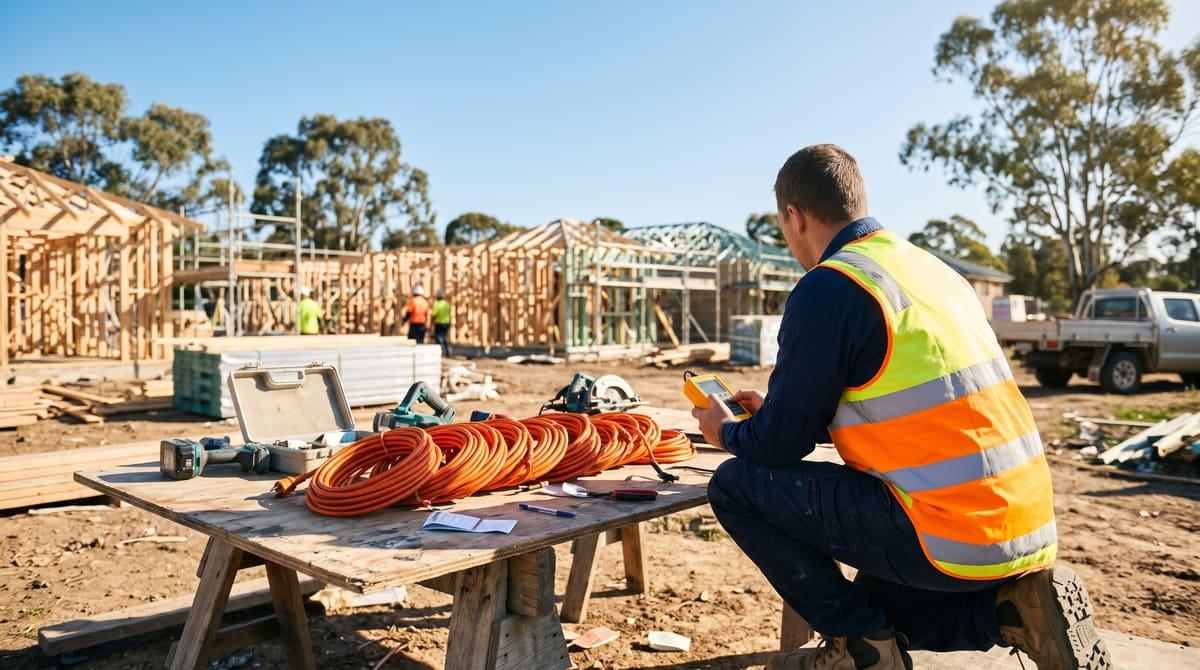
The test and tag industry in Australia is heading into 2027 in good shape. Google searches for "test and tag" are at their highest level since Google Trends records began in 2004, and interest has risen every year since 2022. Around that demand, the wider signals point the same way: electricians are still in national shortage, building work is up on a year ago, and regulators are busy checking the workplaces that test and tag operators serve.
The official projections for the years ahead are encouraging too, with more people at work, strong growth in health care and a big pipeline of building work. This post pulls the numbers together, links every source so you can check them yourself, looks ahead to 2027, and finishes with what it all means if you run, or are about to start, a test and tag business.
All figures were checked on 18 November 2026. Google Trends shows relative interest, not the number of searches, so read it as a direction rather than a count.
Search interest in test and tag is at a record high
Google Trends scores interest in a search term from 0 to 100 over the period you pick, relative to all searches in that place. Here is the yearly average for "test and tag" in Australia, from monthly data going back to 2004:
| Year | Average interest (0–100) |
|---|---|
| 2019 | 56 |
| 2020 | 48 |
| 2021 | 52 |
| 2022 | 52 |
| 2023 | 58 |
| 2024 | 61 |
| 2025 | 70 |
| 2026 (January to mid-November) | 83 |
The 2026 average is the highest of any year on record. It's about 48% above 2019 and 60% above 2022. The dip in 2020 lines up with the year many workplaces were closed, and interest has climbed every year since.
The weekly view over the past five years tells the same story. The average for each 52-week period rose from 37 (late 2021 to late 2022) to 42, 44, 50 and then 60 in the year to early November 2026.
One caution: interest always drops over Christmas and New Year, so the full 2026 average may settle a little lower once December is in. It would still be the highest year on record.
Who is searching, and for what
The searches tell you a lot about the people behind them:
- The top related searches include "test and tag colours", "test and tag equipment", "test and tag requirements" and "what is test and tag". These read like business owners and office managers trying to understand their obligations, which makes them future clients.
- The fastest-rising related search over five years is "what is test and tag", up 90%. New people are discovering that test and tag exists, which grows the pool of businesses that might book you.
- Fire extinguisher testing is rising too, with "fire extinguisher test and tag" up 60%. Clients often want one visit for both. Fire equipment servicing falls under a different standard (AS 1851), and some states have separate licensing for it, so check the rules before you offer it.
- State requirement searches are growing. "Test and tag requirements qld" is up 50%. Clients want answers specific to where they are.
Where interest is strongest
Google Trends also ranks states by the share of all searches that are about test and tag:
| State or territory | Relative interest |
|---|---|
| Northern Territory | 100 |
| Australian Capital Territory | 71 |
| Western Australia | 63 |
| South Australia | 57 |
| Queensland | 51 |
| Tasmania | 50 |
| Victoria | 48 |
| New South Wales | 41 |
This measures share of searches, not the number of people. NSW still has far more searches in total simply because it has more people. What the table does show is that test and tag is a bigger topic for local businesses in the NT, ACT and WA, which suggests operators there have a receptive audience.
Electricians are still in short supply
Jobs and Skills Australia's Occupation Shortage List rates Electrician (General), Electrical Fitter and Industrial Electrician as being in national shortage in 2026. All three have been in shortage every year since 2021.
Even as shortages eased across the wider economy, the 2025 list found that "nearly half of trade roles" were still in shortage, with construction among the areas hit hardest (Jobs and Skills Australia).
For a test and tag business, that's good news on two fronts:
- Less competition for the work. Busy electricians have plenty of installation and fault work, so routine testing of plug-in equipment is easy to hand to a specialist.
- A referral source. An electrician who doesn't want the testing work can pass it to you, and you can send them the repairs from your failed items.
You don't need a full electrical licence to test and tag in most of Australia. You need to be a competent person under AS/NZS 3760, though Queensland has extra licensing rules. Our guide on how to start a test and tag business covers training and licensing by state.
Building work is up on a year ago
The Australian Bureau of Statistics' Construction Work Done figures for the June quarter 2026 (seasonally adjusted) show:
- building work done up 10.0% on a year earlier
- residential building up 9.1% and non-residential building up 11.5% over the year
- total construction work of $82.5 billion, up 2.7% on a year earlier, even after a 2.1% fall in the quarter driven by engineering work
Building sites are some of the most valuable clients a test and tag operator can have. Under AS/NZS 3012, tools, leads and power boards on construction sites are tested every 3 months: four times a year, where most office equipment is tested once a year or less. More building work means more sites, more sheds and more leads to test. Our post on test and tag on construction sites covers the intervals and what builders expect.
The September quarter figures are due from the ABS on 25 November 2026.
Regulators are visiting workplaces
Inspections are a big reason businesses pick up the phone. In early childhood education and care alone, state and territory regulators made almost 7,000 visits to services between 1 July and 30 September 2026, according to ACECQA. Around three-quarters of those visits were about children's health, safety and wellbeing rather than quality ratings.
A centre that's expecting a visit wants its records in order, and electrical equipment is part of that. It's the same story in schools, aged care, construction and hire. For operators, regulator activity turns test and tag from "something we should do" into "something we need done before the visit".
The standard behind the work is settled, too. AS/NZS 3760:2022 is the current edition, and Standards Australia's overview describes it as providing "a structured approach to assessing and maintaining electrical equipment in workplaces".
The outlook for 2027
Nobody publishes a forecast for test and tag itself, so the best guide is the official projections for the things that drive the work: how many people are at work, which industries are growing, how much is being built, and how many electricians there are. On all four, 2027 looks good.
Search interest is on track for another record
Interest in "test and tag" has grown every year since 2022, by between 5% and 19% a year. If 2027 does no more than match the slowest of those years, it will be another record. That's our reading of the trend, not a Google forecast, but the direction has been steady for four years.
More people at work means more workplaces to test
Jobs and Skills Australia's 2025 Employment Projections expect employment to grow by 961,000 people (6.5%) in the five years to May 2030. That's more desks, kitchens, workshops and sites with equipment that needs testing.
The growth isn't spread evenly, and some of the fastest-growing industries are natural test and tag clients. Over the ten years to May 2035, the projections put growth at:
| Industry | Projected employment growth to May 2035 |
|---|---|
| Health care and social assistance | 23% |
| Construction | 12% |
| Education and training | 12% |
| Electricity, gas, water and waste services | 12% |
| All industries | 13% |
Health care and social assistance is already the largest industry, and it's projected to grow fastest because of an ageing population. Aged care homes, clinics and disability services are full of everyday plug-in equipment, from kettles and TVs to hoist and wheelchair chargers. Our guide for NDIS and disability service providers covers what that work looks like.
A big pipeline of building work
Master Builders Australia's March 2026 forecasts are a mixed picture for housing but a strong one for everything else:
- Homes: about 996,000 new home starts over the five years of the National Housing Accord. That's below the 1.2 million target, but it's still close to 200,000 homes a year.
- Non-residential building: $377.5 billion of work projected to 2029–30, up 21.9% on the previous five years.
- Engineering construction: $769.4 billion over the forecast period, up 20.6%.
Master Builders noted that its forecasts were made before the latest interest rate rise, and that housing prospects had weakened since its previous forecasts. Even so, every one of those homes, schools, hospitals and offices is a construction site with tools and leads to test every 3 months while it's being built.
Electricians will stay in demand
There are already 197,300 electricians employed in Australia, 7,200 more than a year earlier, according to the Jobs and Skills Australia profile. Yet the occupation is still rated in shortage in 2026. More electricians are joining the trade and there still aren't enough of them, which keeps test and tag specialists in demand through 2027.
What could slow things down
To be fair to the numbers: interest rate rises and building costs could slow housing, as Master Builders warned. But test and tag is mostly repeat work on equipment businesses already own. A client that tested this year needs testing again on schedule, whatever the economy does, and that steadiness is one of the industry's biggest strengths.
What this means if you run a test and tag business
Put together, the data points to more businesses looking for testing, fewer electricians with time to do it, and more sites that need regular visits. Here's how to make the most of it.
- Be the answer to the questions people search for. Clients search for tag colours, requirements and "what is test and tag". A short page or Google Business Profile post on each, written for your state, puts you in front of them. Our guide to test tag colours and what a tag must show is a good starting point for the questions clients ask.
- Plan for the new-year rush. In the weekly Trends data, interest bottoms out between Christmas and New Year, then climbs back through January into February. Have your rebooking reminders and quotes ready to go out in early January.
- Build relationships with electricians. With electricians in shortage, a referral arrangement can fill your diary. Offer to pass on repairs in return.
- Chase building work. With building activity up on last year and 3-monthly retests on site, one builder can be worth several offices.
- Keep records that stand up to an inspection. Regulators are visiting your clients. If your client can show a clean register and certificate on the day, they'll book you again next year.
If you're working out where your first clients will come from, our guide to finding test and tag clients goes deeper on referrals, local search and rebooking.
Frequently asked questions
Is test and tag a growing industry in Australia?
The signals we can measure say yes. Google search interest in "test and tag" is at its highest level since 2004 and has grown every year since 2022. Electricians remain in national shortage, and building work was up 10% over the year to the June quarter 2026. There's no official count of test and tag businesses, so these are indicators rather than a measure of the industry's size.
What's the outlook for test and tag in 2027?
Positive. Search interest has set a new record each year since 2023. Official projections expect 961,000 more people in work by 2030, with health care growing fastest. Master Builders forecasts a strong pipeline of non-residential and engineering construction to the end of the decade, and electricians are still in shortage. The main risk is a slower housing market if interest rates keep rising.
Which state has the most interest in test and tag?
As a share of all searches, the Northern Territory ranks highest, followed by the ACT and WA. NSW has the largest number of searches overall because it has the largest population.
Is there a busy season for test and tag?
Search interest dips between Christmas and New Year and picks up again through January and February. Your own workload will depend on when your clients' retests fall due.
Do I need to be an electrician to test and tag?
No, not in most of Australia. You need to be a competent person under AS/NZS 3760, usually through a short nationally recognised course. Queensland has its own licensing requirements, so check with the Electrical Safety Office if you work there.
Ready for the growth
More demand means more items, more sites and more retests to keep track of. Koalaris is test and tag software built for that: an equipment register, an offline field app, instant tag printing, certificates with your logo and a free client portal. The Free plan has no card, no end date and no limit on items. When you want invoices on site and Xero sync, Solo is $29 a month.

Koalaris is test and tag software built in Australia. See what it does.
Keep reading
 Guides
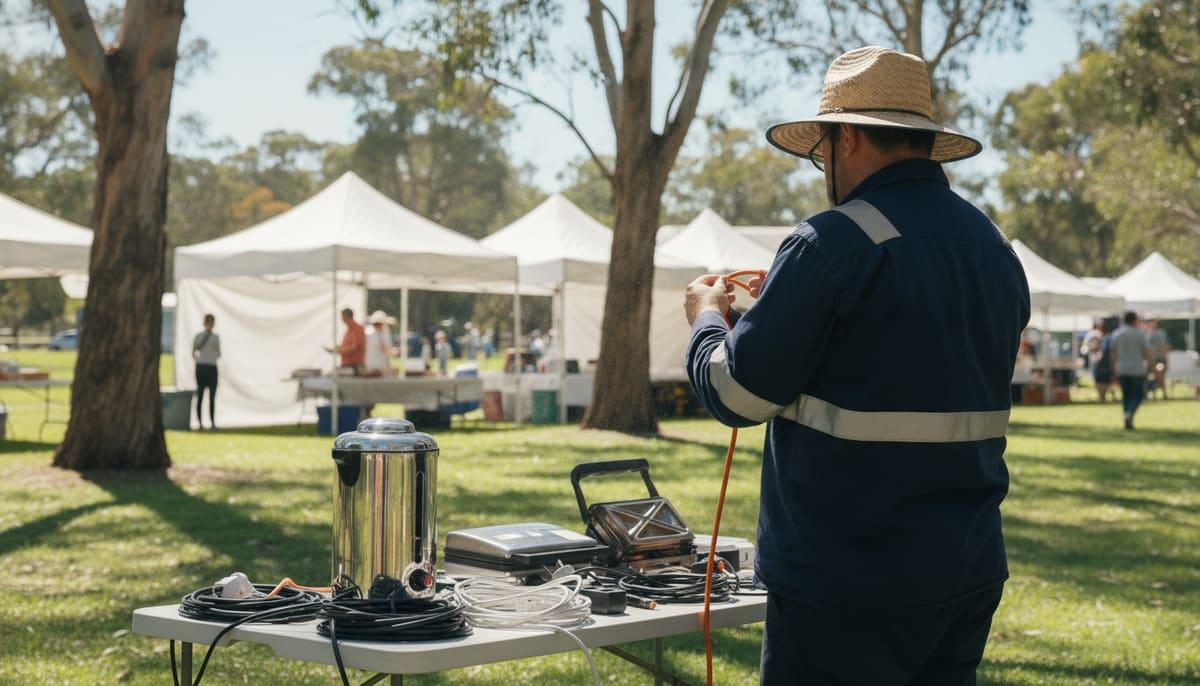
Test and tag for events and markets: a guide for operators
Test and tag for events and markets: what organisers and councils ask stallholders for, AS/NZS 3002, leads and RCDs, and how operators run event-day testing.
 How-to
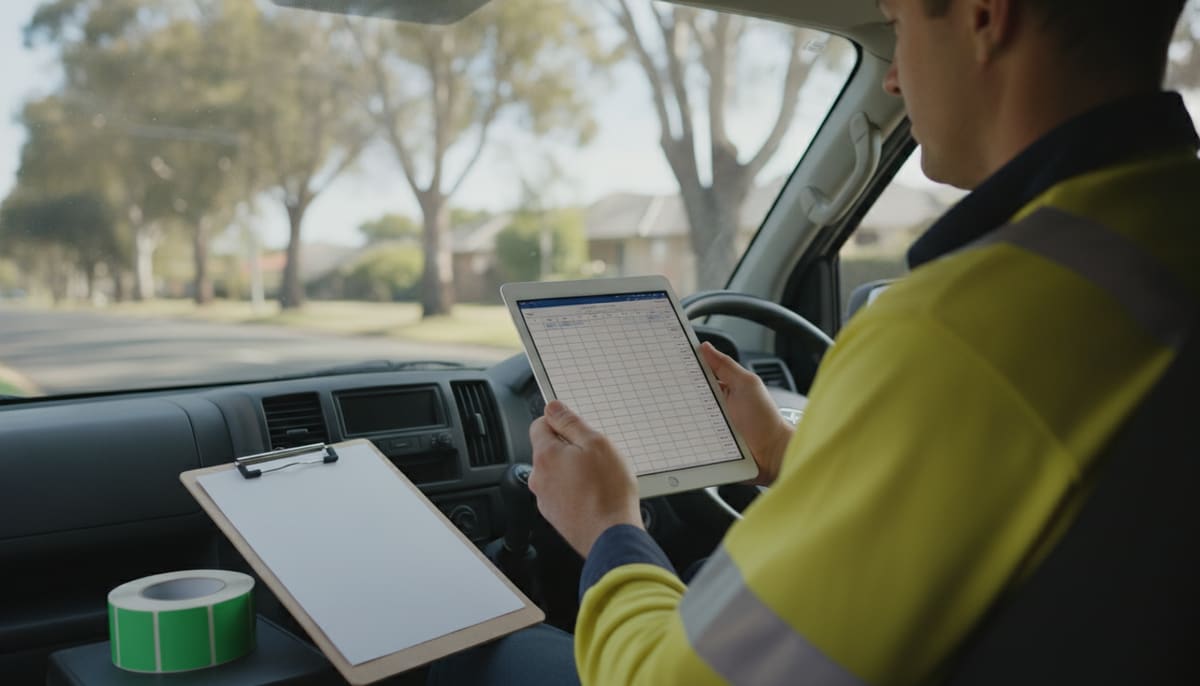
Test and tag register template (free CSV) and how to fill it in
Download a free test and tag register template in CSV. What each column means, the extra columns worth adding, and how to stop Excel breaking your tag numbers.
 Guides
Changing test and tag software without losing your history
Changing test and tag software? When to switch in the retest cycle, how to keep your tags, asset numbers and old certificates, and what to tell your clients.
See your register the way Lyra sees it.
Start free, for as long as you like. No card needed.