How to find your first test and tag clients
Where new test and tag businesses find clients: your network, electricians, Google Business Profile, local door-knocking, property managers and tenders.
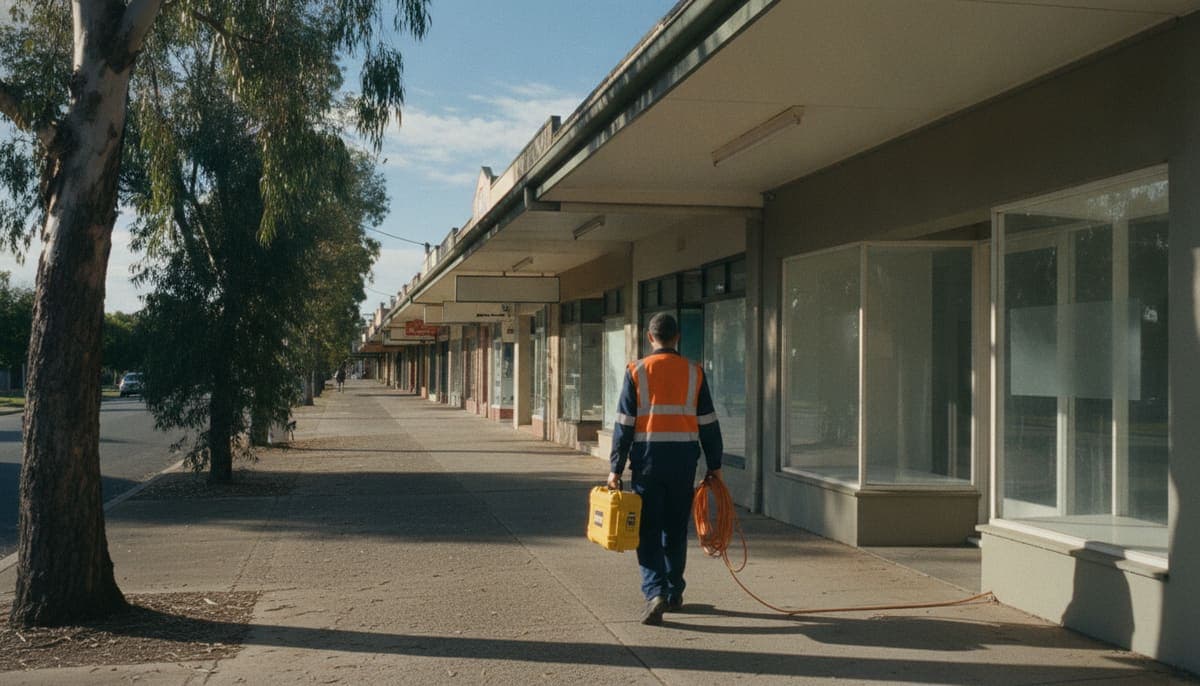
If you want to know how to get test and tag clients when you're starting out, the short answer is that the first ones rarely come from advertising. They come from:
- People you already know who run a business.
- Electricians and other trades who pass on work they don't want.
- A Google Business Profile with a handful of real reviews.
- Walking into the businesses next door to a job you're already doing.
After that, the bigger accounts (property managers, multi-site businesses, schools and councils) come once you can show insurance, a clean sample report and a few happy clients.
This guide goes through each channel in the order most new operators can use them, what to bring to the first conversation, and how to make every job lead to the next one. It's the client side of our guide to starting a test and tag business.
General information only, not legal advice. Work health and safety rules differ between states and territories. Check your regulator before telling a client what they must do.
Know who needs testing, and why
Clients buy test and tag for a reason. If you know the reason, you know who to call and what to say.
Under the model work health and safety laws, a business that manages or controls electrical equipment must ensure, so far as is reasonably practicable, that it's safe to use. For plug-in equipment used in a hostile operating environment, the regulations go further: it must be regularly inspected and tested by a competent person, and if it hasn't been, it must not be used until it is (Safe Work Australia fact sheet).
Safe Work Australia describes a hostile operating environment as one where equipment is exposed to:
- moisture
- heat
- vibration
- mechanical damage
- corrosive chemicals
- dust
Its examples include wet or dusty areas, outdoors, workplaces using corrosive substances, commercial kitchens and manufacturing. The same fact sheet calls out construction and demolition sites (covered by AS/NZS 3012), hire equipment and commercial cleaning equipment as needing tighter attention.
That gives you a ready-made list of businesses with a clear reason to book you:
| Business type | Why they need you |
|---|---|
| Cafés, restaurants, takeaways, club kitchens | Commercial kitchens are a named example of a hostile environment |
| Workshops, fabricators, small manufacturers | Vibration, dust and mechanical damage |
| Builders and trades on construction sites | AS/NZS 3012 applies on site, and head contractors check |
| Equipment hire businesses | Hire equipment carries its own testing rules |
| Commercial cleaners | Cleaning gear is moved, dragged and used near water |
| Gyms, sports clubs, community halls, churches | Lots of shared, moved and outdoor equipment |
| Offices, medical and allied health practices | Lower risk, but many still keep a testing program to show they're managing the risk |
Offices are the hardest sell because the legal driver is weaker in most places. Don't lead with fear. Lead with convenience: one visit, no disruption, a clean record they can show anyone who asks. How often each type should be retested is a separate question, covered in our test and tag frequency guide.
Find the person who actually books it
The owner of a café books it themselves. In bigger places it's usually someone else:
- the office manager or practice manager
- the site manager or WHS officer
- a facility manager or property manager
- head office, for franchises and chains
Ask "who looks after safety checks for the building?" rather than "who's the owner?".
Channel 1: Your own network
Write down every business you have a connection to: where you've worked, where your partner works, your gym, your kids' sports club, your accountant, your mechanic, the café you go to every morning. Most people get past 30 names quickly.
Then contact them one by one, in person or by phone. Keep it short:
- what you do, in one sentence
- that you're local and new, so you can fit around their hours
- a clear price, including your minimum charge
You're not asking for a favour. Many of these businesses need testing anyway and would rather give the work to someone they know.
Channel 2: Electricians and other trades
Some electricians don't want small test and tag jobs: they tie up a licensed worker on lower-value work. Others get asked for it by their clients and have no one to send it to. Either way, you're useful to them.
How to set it up:
- Pick a few local electrical contractors, ideally small ones without their own test and tag person.
- Offer to take the work they'd rather not do, and to send them the repairs you find. Failed items need a licensed electrician to repair them, so the referrals can run both ways.
- Agree the terms in writing: whose name goes on the report, who invoices the client, and any referral fee.
- Never poach their client for electrical work. One complaint from an electrician spreads quickly.
The same idea works with commercial cleaners, office fit-out companies, IT support businesses and bookkeepers. Anyone who already visits small businesses regularly can hand you a lead.
Channel 3: A Google Business Profile with real reviews
When a business owner searches "test and tag near me", the map results are what they see first. A Google Business Profile is free, and for a mobile business it's set up as a service-area business. Google's guidance is to remove your address if you don't serve customers there, and list your service areas instead (Google Business Profile Help). Google says:
- you can list up to 20 service areas, by city, postcode or other area
- your overall area shouldn't be more than about two hours' drive from your base
- you can't set a radius around your business
Then:
- Pick the right category and describe the work plainly: commercial test and tag, RCD testing, the areas you cover.
- Add real photos of your van, your kit and your tags, not stock images.
- Ask every satisfied client for a review before you leave, while they're pleased. A short link sent by text helps.
- Reply to every review, good or bad.
Reviews carry a lot of weight for a buyer who can't judge the technical work themselves. They can judge whether you turned up on time and left the place tidy.
Channel 4: The businesses next door
When you're testing at one shop, the five shops around it have the same kind of equipment and the same reasons to test it. Before you leave, walk in, say you've just done the job next door, and leave a card with your prices. It's the cheapest lead you'll ever get: you're already there and the drive costs nothing.
Phone calls and in-person visits work better than cold email for a new operator. Australia's Spam Act requires consent before you send a commercial email, and you can't send an email to ask for that consent. Every marketing message must also:
- identify your business
- include your contact details
- offer an unsubscribe option
Buying a list doesn't help, because you're still responsible for consent for every address (ACMA). Talk to people first, and send the email once they've said yes.
Channel 5: Property managers and multi-site businesses
Once you have a few clients and a sample report you're proud of, aim higher. One property or facility manager can look after dozens of tenancies or buildings. A franchise or a business with several sites can book them all in one go.
These buyers care about different things:
- Coverage: can you do every site, and on what schedule?
- Records they can find: one register across every site, not a folder of PDFs per visit.
- Low admin for them: reports that arrive on time, and a way to check what's due without emailing you.
Show them a sample register and certificate, and explain how they'll get the results. That's the part of the job these buyers notice most.
Channel 6: Tenders, panels and schools
Schools, councils, hospitals and government agencies usually buy through tenders or supplier panels. These are slower to win and come with paperwork, but the contracts can be large and they tend to repeat.
Each state publishes its own government tenders (Queensland's are on QTenders, for example), and the Commonwealth publishes its own on AusTender. Before you bid, expect to show:
- your ABN and insurance certificates of currency
- evidence of competency, such as the UEERL0003 unit
- any licence your state requires (in Queensland, the business needs an electrical contractor licence that covers testing and tagging)
- a sample report and your record-keeping process
- references from current clients
If you can't meet a large tender alone yet, ask the winning contractor whether they subcontract. It's a way in.
What to bring to the first conversation
Whatever the channel, the same few things win the job:
- A clear price. Per item, a minimum charge and what failed items or leads cost. Our guide to pricing test and tag work shows how to work out a floor you won't regret.
- Proof you're legitimate. Your ABN, a certificate of currency for your insurance, your competency and any licence your state needs.
- A sample of what they'll get. A clean certificate and register with fake data. Clients are buying the record as much as the test.
- A booking that suits them. Before opening, after close or on a quiet day, with minimal disruption.
Make every job win the next one
The first visit is your best sales pitch for the second.
- Do what you said, when you said. Turn up on time, tag neatly and leave the area tidy.
- Explain failures plainly. Give the client a list of failed items and what to do about them. If you have an electrician partner, offer the referral.
- Send the report quickly. Same day if you can, with the invoice.
- Book the next visit before you leave. Put the retest date in your calendar and theirs, and contact them a few weeks before it's due.
- Ask two questions: "Would you leave us a Google review?" and "Who else do you know who needs this done?"
A client who rebooks every year is worth far more than a one-off job. Keep a simple list of every client, their next due date and when you last spoke to them, and check it weekly.
Common mistakes
- Competing on price alone. The cheapest operator in town fills the diary and still loses money once travel is counted.
- Overstating the law. Telling an office it will be fined if it doesn't test is a quick way to lose trust. Explain the real duty and let them decide.
- Spray-and-pray email. Cold marketing emails without consent can breach the Spam Act, and they rarely work anyway.
- No follow-up system. If you can't see who's due next month, you're relying on clients to remember you.
- Records that look homemade. A messy report makes a client wonder what else was rushed.
Tools that make you look established
Clients judge a new business by what they receive. That's one reason we built Koalaris. On the Free plan, with no card and no end date, you get:
- an offline field app for your phone
- tags printed on the spot
- PDF certificates with your logo
- a free portal where clients check their own equipment and due dates
When you want to invoice from the finished visit and take card payments on site, the Solo plan is $29 a month. See plans and pricing.
Frequently asked questions
Where do most new test and tag businesses find their first clients?
Usually through people they already know, then through referrals from electricians and other trades, a Google Business Profile with reviews, and visiting businesses near jobs they already have. Larger accounts such as property managers and tenders usually come later, once there are references to show.
Can I cold email businesses to offer test and tag?
Be careful. Under Australia's Spam Act you need consent before sending a commercial email, and you can't send an email to ask for that consent. Every message must identify you and include an unsubscribe option. Phone calls and in-person visits are a safer way to start the conversation.
Is test and tag a legal requirement for every business?
Not in the same way everywhere. Every business must manage electrical risks, and plug-in equipment in hostile environments, such as commercial kitchens, workshops and outdoor work, must be regularly inspected and tested by a competent person. Construction sites and hire equipment have their own rules. Requirements differ by state, so check your regulator before advising a client.
Should I offer a discount to win my first clients?
A small introductory offer can help, but don't price below your costs. A discount sets the client's expectation for next year, too. A firm minimum charge and a clear per-item price usually win more trust than the lowest quote.
Do I need insurance before I start quoting?
Many larger clients, schools, councils and builders ask for a certificate of currency before you start. Get your insurance in place before you quote that kind of work.

Mohammed spent seven years in equipment maintenance, electrical safety testing and medical equipment servicing before building Koalaris. He holds a Test & Tag qualification and a Queensland Restricted Electrical Licence.
Keep reading
 Guides
Test tag printers compared: Zebra, Godex, Brother or pre-printed tags
Which test and tag printer suits your business? Compare the Zebra ZQ521, Godex RT200, Brother P-touch and pre-printed tags on tag size, durability and setup.
 Guides
Cloud vs desktop test and tag software: which suits your business?
Cloud or desktop test and tag software? Compare backups, offline use, team access, client portals and three-year cost, and see when desktop still makes sense.
 Compliance
Test and tag requirements in Victoria: what WorkSafe expects
Is test and tag mandatory in Victoria? The OHS Act duty, WorkSafe's RCD timeframes, construction site rules, who can test and what records to keep.
See your register the way Lyra sees it.
Start free, for as long as you like. No card needed.