How to start a test and tag business in Australia
Training, licences, ABN and GST, insurance, equipment costs, pricing, records and finding clients: a practical guide to starting a test and tag business.
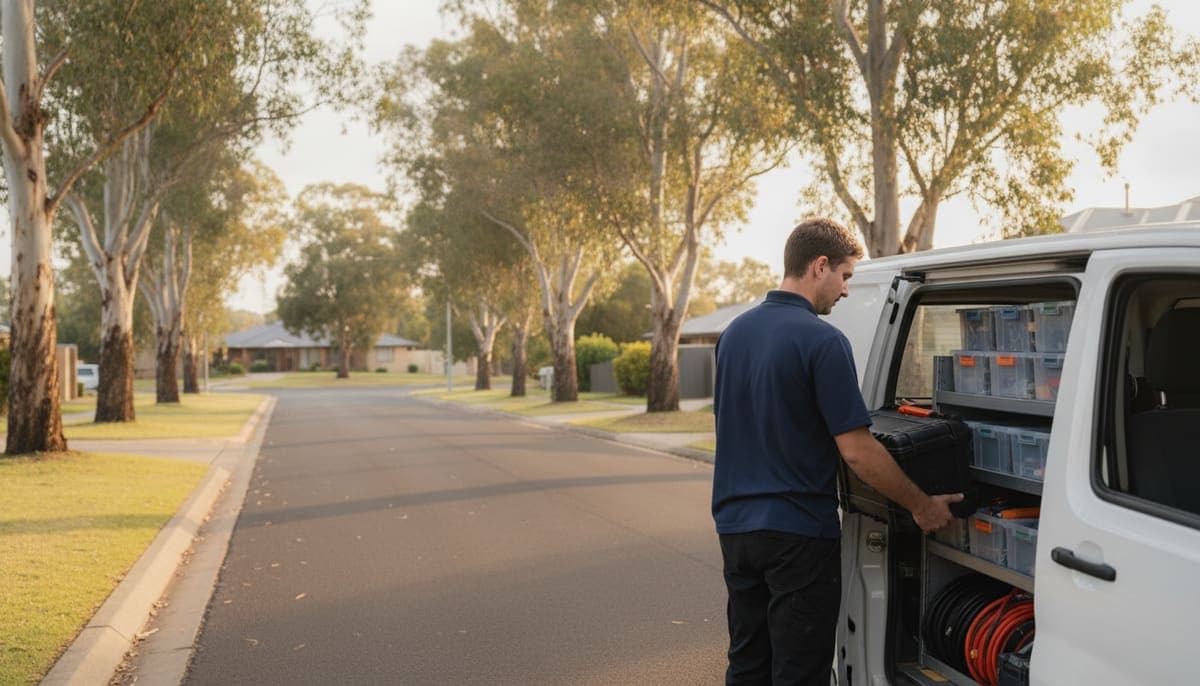
Starting a test and tag business takes six things:
- Training that makes you a competent person.
- The right business registrations, including an electrical contractor licence if you're in Queensland.
- Insurance.
- A tester and a way to tag.
- A price list that covers your costs.
- A record of every item you test.
You don't need a full electrical work licence to do the testing: you need to be a competent person under AS/NZS 3760. The harder part is building a round of clients who rebook you every year.
This guide walks through each step in order. Where the rules differ by state, it says so and points you to the regulator.
General information only, not legal, tax or insurance advice. Check the current edition of AS/NZS 3760 and your state or territory regulator, and talk to an accountant and an insurance broker before you start.
What a test and tag business actually does
You inspect and test plug-in electrical equipment for your clients, then tag it with the result and the next due date. That covers kettles, power tools, extension leads, computers and powerboards. The work follows AS/NZS 3760, the Australian and New Zealand standard for in-service safety inspection and testing of electrical equipment and RCDs.
The business model is repeat work. Equipment is retested at set intervals, from every few months on construction sites to every few years in low-risk offices (see our test and tag frequency guide). So a client you win this year should book you again next year. Every client you keep adds to a base of work that comes back on its own schedule.
What you don't do is repair. When an item fails, you tag it out of service and the owner has it repaired by a licensed electrician or replaced.
Step 1: Get trained and become a "competent person"
Test and tag work has to be done by a competent person. That means someone who has the knowledge and skills to inspect and test electrical equipment through training, qualifications or experience. That's how SafeWork NSW puts it, and other regulators use similar wording.
The nationally recognised unit is UEERL0003 Conduct in-service safety testing of electrical cord connected equipment and cord assemblies (training.gov.au). WorkSafe Queensland names it as the minimum evidence a business should look for when deciding whether someone is competent (WorkSafe Queensland). The unit covers:
- working safely
- using a portable appliance tester (PAT)
- finding faults
- tagging
- arranging repair of faulty equipment
- completing the test documentation
Registered training organisations (RTOs) run it as a short course. Course length, fees and any prerequisite units vary by provider, so compare a few before you enrol.
Step 2: Check the licence rules in your state
This is the step most "start a business" guides skip, and it differs by state.
- The person doing the testing generally doesn't need an electrical licence, just competence. For example, Tasmania says testing and tagging is not a licensed occupation there (Consumer, Building and Occupational Services Tasmania).
- The business may need one. In Queensland, a business that does testing and tagging work must hold an electrical contractor licence that permits that work. If you don't hold any electrical contractor licence, WorkSafe Queensland says to contact the Electrical Safety Office about your licensing requirements (WorkSafe Queensland). A restricted contractor licence endorsed only for testing and tagging doesn't allow you to repair equipment.
- Repairs are electrical work. Replacing a plug or rewiring a lead is work for a licensed electrician.
- Some industries add rules. Construction (AS/NZS 3012) and mining have their own requirements. Check them before you quote that work.
Before you spend money on equipment, call or check the website of the electrical safety regulator in each state you plan to work in. Ask what licence, if any, the business needs.
Step 3: Set up the business
Most people start as a sole trader and change structure later if the business grows. Your accountant can tell you whether a company suits you better.
- ABN. Apply through the Australian Business Register. Commercial clients will expect it on your invoices.
- Business name. If you trade under any name other than your own, register it with ASIC.
- GST. You must register once your GST turnover reaches $75,000 a year, counting either the last 12 months or the next 12. Below that, registering is optional (ATO). Once you pass the threshold you have 21 days to register. Many test and tag clients are businesses that claim GST credits, so registering early often costs them nothing. Ask your accountant which way suits you.
- A separate bank account for the business. It makes tax time and chasing invoices much easier.
Step 4: Sort out insurance
There's no single insurance package that every test and tag business must carry, but clients often ask about it. Larger sites, schools, councils and builders commonly want a certificate of currency before you start. Covers worth discussing with a broker:
- Public liability. Covers injury or damage to other people or property while you're on site.
- Professional indemnity. Covers claims that your testing or advice was wrong. Your tag is effectively a statement about the item's condition.
- Tools and equipment cover. Your tester and printer are the most expensive things you own, and they live in a vehicle.
- Personal accident or income protection. As a sole trader there's no workers' compensation for you.
Ask the broker which covers your target clients typically require, and get quotes before you set your prices. The premiums belong in your costs.
Step 5: Buy the equipment
You need fewer things than people expect, but the tester is a real expense. To give a sense of price, one major supplier's 2026 price sheet lists its Seaward-based range like this (Emona ProTag):
- a basic tester for Class I, Class II, leakage and lead tests at $799 ex GST
- the PrimeTest Pro tester, with a QWERTY keypad and 10 mA and 30 mA RCD trip-time tests, at $2,599 ex GST
- the PrimeTest Pro with a tag printer kit at $3,999 ex GST
The same supplier says Seaward testers are used by most of Australia's testing and tagging service providers.
| Item | What to look for | Notes |
|---|---|---|
| Portable appliance tester (PAT) | Class I and Class II appliances, leads and RCD tests to AS/NZS 3760 | The biggest cost. A model that stores results and exports them saves retyping. |
| RCD tester | Trip-time tests at 10 mA and 30 mA | Many mid-range PATs include it. Check before you buy twice. |
| Tags | Durable, tamper-evident, with room for the details your records need | Pre-printed write-on tags are fine to start with. |
| Tag printer (optional at first) | Prints the date, result and next due date | Saves handwriting and makes tags readable. Compare tag sizes before you buy. |
| Phone or tablet | Runs your test and tag app on site | You already have one. |
| Vehicle, PPE and consumables | — | Count running costs, not only the purchase price. |
| Software | Register, tags, certificates, invoices | See step 8. |
One franchise operator suggests budgeting at least $10,000 to $15,000 to get going properly (The Local Guys). That's their figure, not ours. Your own number depends mostly on which tester you buy, any licence costs in your state, and whether you already have a vehicle. You can start leaner with a basic tester and write-on tags, then add a printer once the work justifies it.
Step 6: Set your prices
Most test and tag businesses charge per item, with a minimum charge per visit. Published guides put typical Australian per-item rates at roughly $3 to $9.50 plus GST, with a call-out or minimum of about $100 to $250 plus GST. Large sites pay the lower end and small offices the higher end (The Local Guys price guide, What's the Damage). These come from providers and cost-guide sites, so treat them as a market range, not a rule.
Don't copy the cheapest rate in your area. Work out your own floor:
- Add up your yearly costs: insurance, licence fees, software, tags, vehicle, phone, calibration, accounting and the tester's cost spread over its life.
- Decide what you need to pay yourself for the year.
- Estimate how many items you can realistically test in the days you'll actually work. Remember travel, set-up, finding equipment hidden under desks and writing up.
- Divide costs plus pay by items. That's your break-even rate per item. Your price needs to sit above it.
Worked example (illustrative numbers only). Suppose your costs and pay add up to $70,000 a year, and you expect to test 14,000 items. Your break-even is $5 an item. A small office with 30 items would earn $150 at that rate. That's why a minimum charge matters: it stops small jobs from costing you money once you count the drive.
Also decide up front:
- what you charge for failed items, leads and three-phase equipment
- whether RCD testing is priced separately
- what your payment terms are
Step 7: Keep proper records from the first job
Your records are what your client is really paying for. When an inspector or insurer asks "show me this was tested", you need to be able to answer.
In NSW, for example, SafeWork NSW says a test record must show:
- who did the test
- the date
- the outcome
- the date the next test is due
The record can be the tag on the equipment. It must be kept until the item is next tested, permanently removed from the workplace or disposed of.
In practice, a good register holds more than that for every item:
- the client, site and location
- an asset ID that matches the tag
- a description and equipment class
- the test readings
- pass or fail
- the next due date
- for failures, what happened to the item
Set this up properly from your first client. It's much harder to fix two years in, when it's spread across paper sheets and spreadsheets (we wrote a separate guide on moving a register off spreadsheets for when that happens).
Use the test and tag interval calculator to work out next-due dates by environment, and check each against the current standard and your client's own risk assessment.
Step 8: Choose software before you need it
On day one a spreadsheet and a receipt book feel like enough. By your tenth client you'll be retyping test results, hunting for who's due next month and chasing invoices from your kitchen table. Pick tools that handle the whole job, not only the test:
- Works offline. Plant rooms, basements and rural sites often have no signal.
- A register for every client and site, with full history per item.
- Tags and certificates produced from the results, not typed again.
- Retest due dates you can see across all clients.
- Invoices you can send before you leave the site, and ideally card payments.
- Imports from your tester's export file or an existing spreadsheet, so a client who switches to you doesn't mean retyping their register.
- Client access, so clients can check their own compliance without emailing you.
That list is why we built Koalaris, a test and tag app for the whole business. Every item on it is in the Solo plan at $29 a month (see pricing):
- an offline field app on your phone
- tags printed over Bluetooth to a Zebra or Godex printer, or through the print dialog to a Brother
- certificates
- invoices with card payments by QR code
- Xero sync
- a free client portal
There's a 14-day free trial with no card needed. Whatever you choose, pick it before your first big client, not after.
Step 9: Find your first clients
Your first clients usually come from people you already know. After that, it's steady, unglamorous work:
- Ask everyone you know who runs a business. Offices, cafés, gyms, clubs, churches, sports clubs and community halls all have equipment that needs testing.
- Partner with electricians. Many don't want small test and tag jobs and will pass them on. Some operators pay a referral fee.
- Set up a Google Business Profile listing your service area, and ask happy clients for reviews.
- Target sectors with regular testing, such as construction, hire businesses, childcare, schools and aged care. Learn their specific requirements before you pitch.
- Rebook before the due date. Contact each client a few weeks before their retest is due. A client you never have to win again is worth more than any new lead.
Step 10: Get paid on the day
Small businesses fail from cash flow, not lack of work. Habits that help from the start:
- Invoice on site, straight after the visit, while the client is standing there.
- Keep payment terms short for small clients and put them on the quote.
- Take card payments on your phone so small clients can pay before you leave.
- Send the certificate with the invoice. It shows what they paid for.
Common mistakes when starting out
- Skipping the licence check. In Queensland, a test and tag business without the right electrical contractor licence is a problem you don't want to find out about from a client or the regulator.
- Pricing below cost to win work. Undercutting fills your diary with jobs that lose money once you count travel and admin.
- No minimum charge. A 15-item job across town can cost you more than it earns.
- Records you can't search. If you can't answer "which of this client's items are due in March?" in a minute, your system won't scale.
- Testing outside your competence. Three-phase, construction and mining can carry extra requirements. Get the right training first.
- Forgetting rebooking. Retests are the business. Without a rebooking system you start from zero every year.
Frequently asked questions
Do I need an electrical licence to start a test and tag business?
The person doing the testing generally needs to be competent, not licensed. UEERL0003 is the usual evidence. The business is a different matter in some states. In Queensland, a business doing testing and tagging work must hold an electrical contractor licence that permits it. Repairs to faulty equipment always need a licensed electrician. Check with your state's electrical safety regulator before you start.
What course do I need to do test and tag?
The nationally recognised unit is UEERL0003 Conduct in-service safety testing of electrical cord connected equipment and cord assemblies. Registered training organisations run it as a short course. Length, fees and prerequisites vary by provider.
How much does it cost to start a test and tag business?
The tester is the main cost. One major supplier lists a basic Seaward tester at $799 ex GST and a PrimeTest Pro with a tag printer kit at $3,999 ex GST. Add training, any licence your state needs, insurance, tags, software and running a vehicle. One franchise operator suggests budgeting $10,000 to $15,000. You can start leaner with a basic tester and write-on tags.
Can I run a test and tag business part time?
Yes. Many operators start part time around another job and go full time once their round of repeat clients is big enough. Most commercial clients want weekday visits, so plan around that.
Should I buy a franchise or go independent?
A franchise gives you training, a brand and leads, in return for fees and rules about how you operate. Independent means keeping everything you earn but finding every client yourself. Read the franchise agreement and any income guarantee carefully, and have it reviewed, before you sign.
Do I need to register for GST?
You must register once your GST turnover reaches $75,000 a year. Below that it's optional. Talk to your accountant about whether registering earlier suits your clients.

Mohammed spent seven years in equipment maintenance, electrical safety testing and medical equipment servicing before building Koalaris. He holds a Test & Tag qualification and a Queensland Restricted Electrical Licence.
Keep reading
 How-to
Outgrowing SwiftPAT? When a test and tag business needs more than a phone app
SwiftPAT is a quick, low-cost Android app for solo testers. When you add staff, clients or invoicing, here's what changes and how to bring your records across.
 How-to
Looking for a PATGuard alternative? How to move your test and tag records
Thinking of leaving PATGuard? How to export your test and tag records to CSV, import them into a new register without retyping, and what to check first.
 Guides
How often does equipment need testing and tagging? A plain-English guide
Re-test intervals for test and tag in Australia, explained simply: what sets them, typical intervals by environment, and how to keep track of every due date.
See your register the way Lyra sees it.
Start a 14-day free trial of Pro. No card needed.