Test and tag colours: what they mean and what a tag must show
What test and tag colours mean, whether colour coding is required, and what details a test tag must show in NSW, WA, QLD and on construction sites.
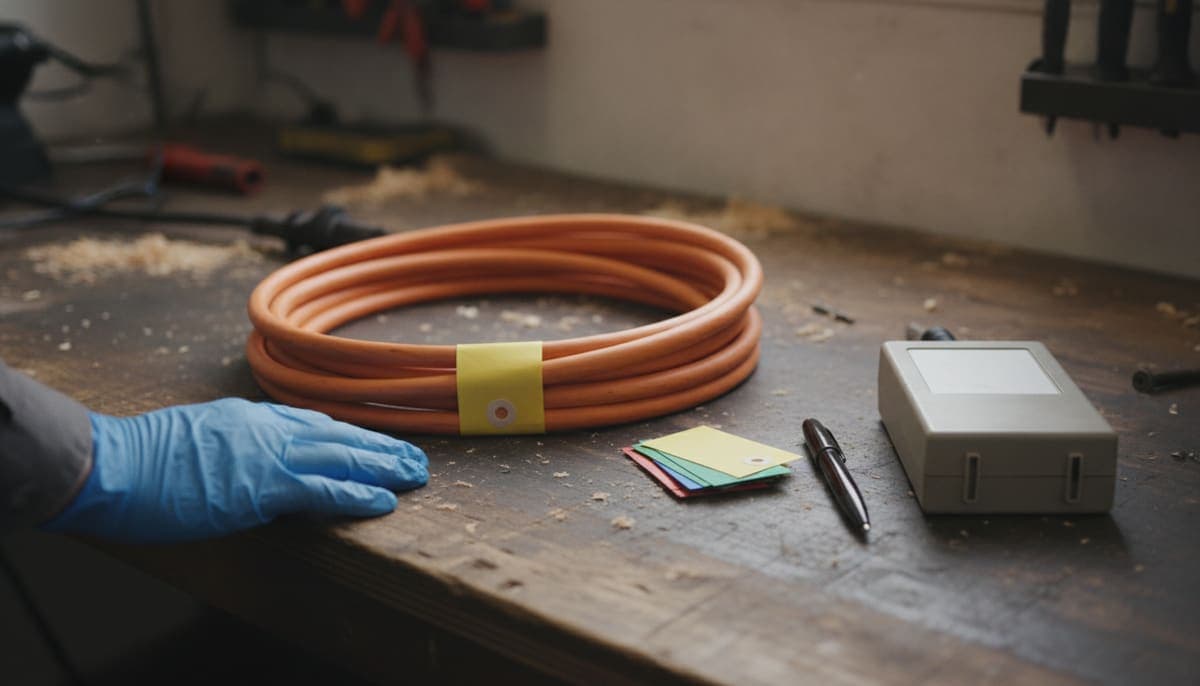
Test and tag colours show when an item was tested, not whether it's safe or when it's due. On construction sites, most operators follow a four-colour rotation that changes every three months: red, green, blue and yellow. Outside construction, regulators say colour coding is optional. What a tag must carry is the information: who did the test and the test or retest date, plus the outcome and next due date wherever the tag is the only record.
This guide is for test and tag operators answering the "what does this colour mean?" question from clients, and for anyone setting up their tags for the first time. It separates what the law requires, what regulators recommend and what's simply common practice.
General information only, not legal advice. Requirements differ by state and industry. Check your state or territory regulator, the current editions of AS/NZS 3760 and AS/NZS 3012, and any site rules set by a head contractor or client.
What test and tag colours mean
The colour of a test tag usually tells you which period the item was tested in. Its job is to let a supervisor scan a room or a site and spot gear from an old testing period without reading every tag.
The rotation most construction sites use, and the one you'll see on most pre-printed tag rolls sold in Australia, is:
| Tag colour | Tested in |
|---|---|
| Red | December, January, February |
| Green | March, April, May |
| Blue | June, July, August |
| Yellow | September, October, November |
So a drill tested in January carries a red tag. On a construction site, where portable equipment is retested every three months, it should have a green tag by the end of May. If you see a red tag in June, it's worth a closer look.
Two things to tell clients:
- The colour isn't the due date. It shows the testing period, and intervals vary from three months on a building site to five years for some office equipment. The retest date written on the tag is what counts.
- A current colour isn't proof of safety. WorkSafe Victoria points out that a test tag "does not necessarily mean that the equipment is in good condition", because it may have been damaged since the test (WorkSafe Victoria). Users should still check leads and plugs before each use.
Is colour coding a legal requirement?
Not in the regulator guidance we checked.
- NSW and WA. Both states' codes of practice on managing electrical risks say a tag may be colour coded to identify the month the testing was carried out (SafeWork NSW code, WorkSafe WA code). "May" makes it optional.
- Construction sites. The NT WorkSafe bulletin on construction sites lists what a site tag must show (name, test date and expiry date) and doesn't set a colour (NT WorkSafe). Many tag suppliers and trainers attribute the quarterly rotation to AS/NZS 3012, the construction and demolition standard. It's a paid standard and we haven't been able to confirm that wording ourselves, so treat the rotation as the industry norm on sites rather than a rule you can quote.
- Site and client rules. A head contractor, mine or large client can make a colour system part of their own site rules or contract. If they do, it's a requirement for you on that site.
In practice: on construction, use the quarterly rotation unless the head contractor runs a different system. Elsewhere, a single bright tag colour is fine. Some clients still like colours by period, so ask.
What must be on a test tag
The details a tag must show come from the law in each state, not from the colour. These are the main rules for a passed item.
NSW, WA and the other model WHS states
Under regulation 150 of the WHS Regulations, the record of testing must show:
- the name of the person who did the test
- the date of the test
- the outcome
- the date the next test is due
The record can be a tag. If the tag doesn't fit all four details, the rest must be recorded elsewhere, such as a register. The NSW and WA codes say a tag should be durable, water resistant, non-metallic, self-adhesive or well secured, incapable of re-use, and have a bright, distinctive surface. We cover the details in our guides to NSW test and tag rules and WA requirements.
Queensland
Queensland sets its own "prescribed details" for tags under the Electrical Safety Regulation 2026. A pass tag must show at least the test date or the retest due date, and who did the test: the tester's name, a licence number or the company name. WorkSafe Queensland's guidance says the tag should show both the test date and the next scheduled test date (WorkSafe Queensland). The full breakdown is in our Queensland requirements guide.
Construction and demolition sites
NT WorkSafe says equipment tested under AS/NZS 3012 and AS/NZS 3760 must be fitted with a durable, non-metallic tag showing:
- the name of the person or company who did the test
- the test date
- the expiry date
Other regulators list similar details. Our guide to test and tag on construction sites compares them and covers the three-monthly cycle.
One tag that works everywhere
If you work across states or industries, design one tag that satisfies all of the above:
- your name, and your company name
- your licence number, if you hold one
- the item's asset number or ID
- the test date
- the next test (retest) date
- the result: "Tested" or "Pass"
Tags with an asset number make the tag easy to match to a register entry, and they help when a client asks about a single item months later.
What happens when an item fails
A failed item doesn't get a coloured test tag. It gets taken out of use and labelled.
- The NSW code says unsafe electrical equipment should be labelled to show it is unsafe and must not be used, so nobody uses it before it's tested, repaired or replaced. Its example out-of-service tag says "Out of service" and "Do not use or operate", with room for the name, organisation, date and reason.
- In Queensland, the tester must immediately attach a durable tag warning people not to use the item, and it must be withdrawn from use straight away.
- On construction sites, NT WorkSafe says failed equipment must be removed from service immediately and fitted with a notice warning against further use.
Out-of-service tags are usually red or red and white, but the colour is a convention. The wording is what matters. Record the failure too: the item, the fault, who tagged it out and what happened next. A client will want that list before you leave.
Practical tips for operators
- Agree the system before the first visit. Ask whether the client or head contractor has a colour scheme, and write it on the job.
- Buy tags for the right environment. Construction tags take more punishment than office tags. Choose a durable, non-metallic tag that can't be peeled off and re-stuck.
- Always write both dates. The test date and the retest date between them satisfy every rule above, and they make the colour a back-up rather than the only signal.
- Don't lean on the tag alone. Tags fade, get painted over and get pulled off. A register keeps the full record, and in model WHS states it holds whatever the tag can't fit.
- Plan your stock. On a quarterly rotation you need the next period's colour on hand before a retest visit. Pre-printed rolls come by colour, and if you print your own tags, the colour comes from the label stock you load. Our comparison of test tag printers covers the options.
Keeping tags and records in step
Koalaris keeps a register for every client and site, and each test you record in the field app sets the item's next due date, even offline. Test tags print on the spot to a Zebra, Godex or Brother label printer, with the item's number printed large so it matches the register. Clients can check their own records in a free client portal. Every business starts on the Free plan, with no card and no end date. See how it works on the Koalaris test and tag app page.
Frequently asked questions
What colour test tag is used for each month?
On a quarterly rotation: red for December to February, green for March to May, blue for June to August and yellow for September to November. It's the system most construction sites and pre-printed tag rolls use. Outside construction, regulators in NSW and WA say colour coding by month is optional.
Does the tag colour tell me when the item is due?
No. The colour shows when the item was tested. The due date depends on the environment and the rules that apply, so read the retest date on the tag. Our test and tag frequency guide covers the usual intervals.
Can I use one colour for all my tags?
Outside construction, yes, as long as the tag carries the required details and the client doesn't ask for a colour system. Regulator codes ask for a bright, distinctive tag, not a particular colour. On construction sites, follow the site's colour system.
What should be written on a test tag?
At minimum, who did the test and the test or retest date. Where the tag is the only record in a model WHS state, it also needs the outcome and the next due date. Writing your name, company, licence number if you have one, the asset ID, test date, retest date and result covers every state.
What does a red test tag mean?
On a quarterly rotation, red means the item was tested between December and February. A red-and-white "Out of service" or "Danger" tag is different: it means the item failed or is unsafe and must not be used.

Koalaris is test and tag software built in Australia. See what it does.
Keep reading
 Guides
Test and tag retest reminders: managing rebookings across many clients and sites
How to run test and tag retest reminders across many clients and sites: due dates per item, a monthly look-ahead, timed contact, grouped visits and spam rules.
 Compliance
Test and tag requirements in WA: what the WHS laws say
Is test and tag mandatory in WA? What the WHS (General) Regulations 2022 require, WorkSafe WA's suggested intervals, who can test, RCDs and records to keep.
 How-to
Metrel ES Manager export: getting your test and tag records into a cloud register
How to export test and tag records from Metrel ES Manager to Excel, what the Basic and Pro exports contain, and how to bring them into a cloud register.
See your register the way Lyra sees it.
Start free, for as long as you like. No card needed.