Test and tag requirements in NSW: what the WHS Regulation says
When test and tag is legally required in NSW, what clause 150 covers, RCD rules, who can test and what a test record must show under the WHS Regulation 2025.
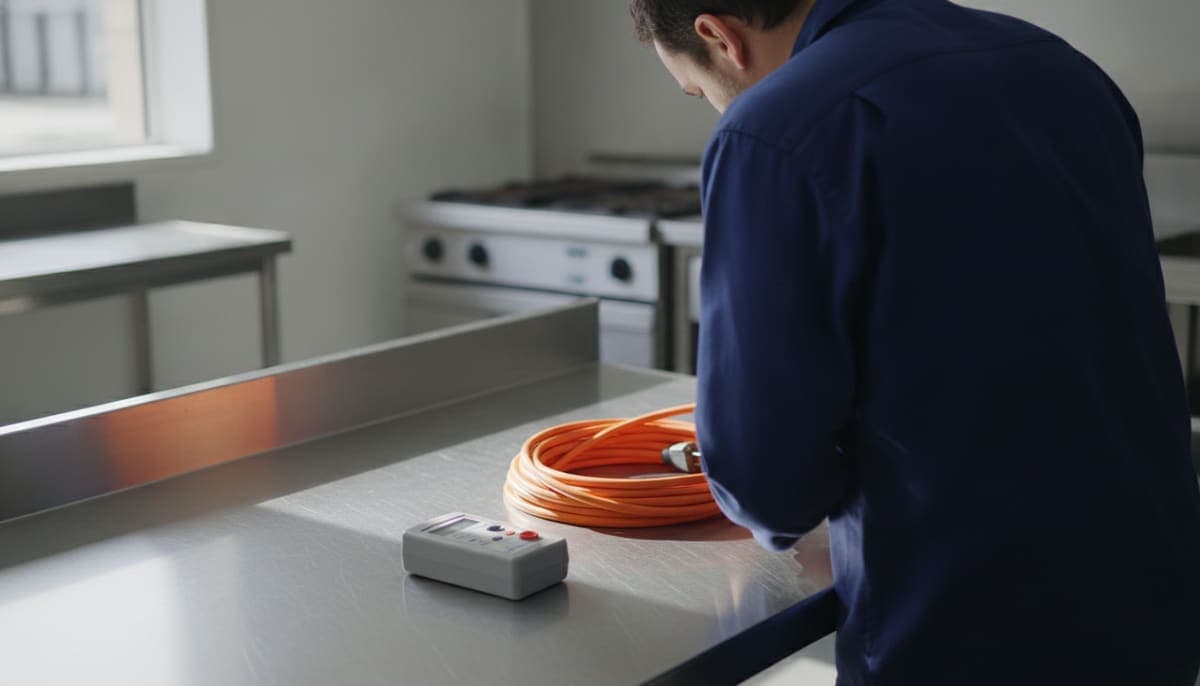
Test and tag requirements in NSW come from the Work Health and Safety Regulation 2025. Under clause 150, a business must make sure plug-in electrical equipment is regularly inspected and tested by a competent person when it's used somewhere that is likely to damage it or shorten its life, such as wet, dusty, hot or outdoor areas, workshops and commercial kitchens. The test result must be recorded, and a tag can be that record. Unlike Queensland, NSW law doesn't set fixed intervals. SafeWork NSW's code of practice and AS/NZS 3760 guide how often to test, and construction sites follow AS/NZS 3012.
The 2025 Regulation commenced on 22 August 2025 and replaced the Work Health and Safety Regulation 2017. The official text says its object is to remake the 2017 Regulation with no significant changes, and the electrical clauses keep their familiar numbers. So guides and client policies that quote "clause 150" are still pointing at the right rule.
General information only, not legal advice. Check the current Work Health and Safety Regulation 2025, SafeWork NSW's guidance and the relevant standards for your situation. For licensing questions, contact NSW Fair Trading or the Building Commission NSW.
Where the NSW rules come from
Four documents work together, and it helps to know which one is law:
| Document | What it does | Binding? |
|---|---|---|
| Work Health and Safety Act 2011 (NSW) | General duty to manage health and safety risks, including electrical risks | Yes |
| Work Health and Safety Regulation 2025 (NSW) | Clauses 150 and 151 (testing and untested equipment), 164 and 165 (RCDs), and construction work duties | Yes |
| Code of practice: Managing electrical risks in the workplace | SafeWork NSW's practical guidance, including suggested intervals | Approved code. It can be used as evidence of what's known about a risk and how to control it |
| AS/NZS 3760 and AS/NZS 3012 | How to inspect and test, and indicative intervals. AS/NZS 3012 covers construction and demolition sites | The Regulation requires AS/NZS 3012 on construction sites. Elsewhere, AS/NZS 3760 is the standard the code points to |
This is the main difference from Queensland, where a separate Electrical Safety Regulation sets legal maximum intervals by type of work. If you work across the border, our guide to test and tag requirements in Queensland covers the other side.
When test and tag is legally required in NSW
Clause 150 applies to a person conducting a business or undertaking (PCBU) at a workplace. That's your client, the business that controls the equipment. The clause covers electrical equipment that is both:
- supplied through a socket outlet, meaning plug-in equipment, and
- used where its normal use exposes it to conditions likely to damage it or shorten its life, including moisture, heat, vibration, mechanical damage, corrosive chemicals or dust
SafeWork NSW's code calls these higher risk operating environments, and other guides call them hostile environments. The code's examples are wet or dusty areas, outdoors, workplaces that use corrosive substances, commercial kitchens and manufacturing. If equipment falls under clause 150, the PCBU must make sure it's regularly inspected and tested by a competent person.
Offices, shops and classrooms
Clause 150 doesn't name dry, clean workplaces. The code's examples of lower-risk workplaces are an office, a retail shop, a telecommunications centre and a classroom. That doesn't mean their equipment never needs testing. The code says equipment in these places "may still need inspection and testing", just less often, and points to AS/NZS 3760 and the manufacturer's recommendations. The PCBU's general duty to manage electrical risks still applies.
In practice, the line can run through a single client. A school has classrooms and offices, but also a kitchen, a workshop and a cleaner's cupboard. Treat each area on its own merits, and record why you've classed it the way you have.
Untested equipment must not be used
Clause 151 says that if equipment is required to be tested under clause 150 and hasn't been, the PCBU must make sure, so far as is reasonably practicable, that it isn't used. The code suggests storing it in a locked area or using lock-out labels and tags until it's tested.
New equipment
Brand new equipment that has never been used doesn't need testing before first use, but it should be visually inspected for damage from transport or installation. The code suggests recording the date it went into service, or fitting a "new to service" tag showing the date of entry into service and when the first test is due. A trained in-house person can fit that tag. Second-hand equipment is different: the code says it should be tested before first use.
Equipment should also be tested after a repair or service that could affect its electrical safety.
How often to test in NSW
NSW law doesn't set test and tag intervals. Clause 150 says "regularly", and SafeWork NSW's code gives guidance:
- Higher risk environments: as a general rule, test at least once every 12 months.
- Manufacturing and workshop equipment: more often, for example at least every 6 months.
- Commercial cleaning equipment: for example at least every 6 months.
- Hire equipment: inspect at the start of each hire and test every 3 months.
The code's wording is "should", so these are recommendations, not legal maximums. A client's risk assessment, insurer, head contractor or site rules can ask for shorter intervals. AS/NZS 3760 sets out indicative intervals for a range of environments, which we've summarised in our guide to test and tag frequency. To work out next-due dates from a test date, try the test and tag interval calculator.
One thing to watch: the SafeWork NSW code was last updated in 2019 and still refers to AS/NZS 3760:2010. The current edition of the standard is AS/NZS 3760:2022, so check the edition your client's policy names.
Safety switches (RCDs)
When an RCD is required
Clause 164 says that, so far as is reasonably practicable, the risk from supplying electricity to plug-in equipment through a socket outlet must be minimised by an appropriate RCD when the equipment is:
- used in a hostile operating environment
- moved between locations where damage to it or its cord is reasonably likely
- frequently moved during normal use, or
- part of, or used with, an amusement device
Where an RCD is needed for a socket outlet of 20 A or less, its tripping current must not exceed 30 mA. There are exceptions, such as supplies of 50 V AC or less, DC, or an isolating transformer that gives at least equivalent protection.
Testing RCDs
Clause 165 says the person with management or control of the workplace must take all reasonable steps to make sure RCDs are tested regularly by a competent person. That applies to fixed RCDs at the switchboard as well as portable ones. A record of testing, other than daily push-button tests, must be kept until the RCD is next tested or disposed of. An RCD that fails must be taken out of service and replaced as soon as possible.
In NSW, unlike Queensland, an RCD isn't an alternative to testing equipment. Where clause 150 applies, the equipment still needs regular inspection and testing.
Construction sites, hire and events
- Construction and demolition sites: a PCBU carrying out construction work must comply with AS/NZS 3012, which sets its own inspection and testing regime for site equipment.
- Hire equipment: the code says hirers should inspect at the start of each hire and test every 3 months. The business using hired equipment should make sure it meets the testing requirements for the period of the hire.
- Shows and events: for amusement devices at shows and events, SafeWork NSW's guidance for organisers says all testing and tagging, including RCDs, must be done by a competent person at least every 12 months, and suggests organisers ask suppliers for a register showing testing in the past 12 months (SafeWork NSW).
Who can test and tag in NSW
The testing must be done by a competent person: someone who has acquired the knowledge and skills to inspect and test electrical equipment through training, qualification or experience (SafeWork NSW). The code says that, depending on the law that applies, this could be:
- a licensed or registered electrician
- in some jurisdictions, a licensed electrical inspector, or
- a person who has completed a structured training course and been deemed competent in using a pass-fail portable appliance tester and visually inspecting equipment
The code also says the tester should be competent to interpret the results of the equipment they use. The nationally recognised unit for this work is UEERL0003 Conduct in-service safety testing of electrical cord connected equipment and cord assemblies, and it's what most test and tag courses deliver.
Licences and repairs
SafeWork NSW's guidance frames test and tag around competence, and we couldn't find a separate NSW licence for testing and tagging itself. Repairs are a different matter. The code notes that some testing, such as testing that involves dismantling equipment, may need a licensed electrician. NSW also requires an electrical licence for any electrical wiring work. If you plan to replace plugs or repair leads as part of your service, confirm with NSW Fair Trading or the Building Commission NSW what your licence needs to cover before you start.
If you're setting up a business, our guide on how to start a test and tag business covers training, insurance and pricing.
What a NSW test record must show
Clause 150 requires the PCBU to keep a record of testing until the equipment is next tested, permanently removed from the workplace or disposed of. The record must show:
- the name of the person who did the testing
- the date of the testing
- the outcome of the testing
- the date the next test is due
The record can be a tag on the equipment. If the tag doesn't fit all four details, the rest must be recorded elsewhere. The code says a tag should be durable, water resistant, non-metallic, self-adhesive or well secured, not reusable and brightly coloured. Colour coding by month is optional.
A tag alone is the legal minimum, but tags get damaged, painted over and pulled off. The code lists the advantages of a logbook, database or register: a permanent record if tags are lost, easier internal audits and room for more detail. SafeWork NSW even publishes a test and tag register template. For a test and tag business, the register is what your client is really buying: it's what they show an inspector or insurer.
A NSW checklist for each client
- Sort each area into higher risk (clause 150 applies) or lower risk, and write down why.
- List the plug-in equipment in higher risk areas, including leads and powerboards.
- Agree the intervals with the client, using the code and AS/NZS 3760, and any shorter ones their insurer or site rules require.
- Check RCD protection where clause 164 applies, and book regular RCD testing under clause 165.
- Tag and record every test with the tester's name, date, outcome and next due date.
- Tag out failures and make sure untested or failed items can't be used.
- Give the client a copy of the register, and keep your own.
Keeping NSW sites on track
Without legal intervals in NSW, each client ends up with its own mix of 3, 6, 12-month and longer retests. That's hard to track on paper. Koalaris keeps a register for every client and site, records each test in a field app that works offline, prints test tags and produces certificates. Clients can check their own records in a free portal. The Solo plan is $29 a month, and every new business gets a 14-day trial with no card needed. See how it works on the Koalaris test and tag app page.
Frequently asked questions
Is test and tag mandatory in NSW?
It's mandatory for plug-in equipment used where conditions are likely to damage it or shorten its life, such as wet, dusty, hot or outdoor areas, workshops and commercial kitchens (clause 150 of the WHS Regulation 2025). For lower-risk places like offices, the law doesn't name test and tag specifically, but the business must still manage electrical risks, and SafeWork NSW's code says that equipment may still need less frequent testing.
How often does equipment need to be tested in NSW?
NSW law says "regularly" and doesn't set intervals. SafeWork NSW's code suggests at least every 12 months in higher risk environments, every 6 months for manufacturing, workshop and commercial cleaning equipment, and every 3 months for hire equipment. AS/NZS 3760 gives indicative intervals for other environments.
Do I need a licence to test and tag in NSW?
The WHS Regulation requires a competent person, and SafeWork NSW's guidance describes competence through training, qualifications or experience. A structured course such as UEERL0003 is the usual route. Repairs that involve electrical wiring work need an electrical licence, so check with NSW Fair Trading or the Building Commission NSW before offering them.
Is a tag enough, or do I need a register?
A tag can be the legal record if it shows who tested, the date, the outcome and the next due date. If it doesn't fit everything, the rest must be recorded elsewhere. A register is recommended because tags get damaged or removed.
Did the 2025 Regulation change test and tag in NSW?
The WHS Regulation 2025 replaced the 2017 Regulation on 22 August 2025. Its stated object is to remake the 2017 Regulation with no significant changes, and the test and tag clauses still sit at clauses 150 and 151, with RCDs at 164 and 165.

Mohammed spent seven years in equipment maintenance, electrical safety testing and medical equipment servicing before building Koalaris. He holds a Test & Tag qualification and a Queensland Restricted Electrical Licence.
Keep reading
 Guides
How to price test and tag work: per-item rates, minimums and call-outs
How much to charge for test and tag: work out your per-item floor, set a minimum charge, price RCDs and failed items, and quote jobs without losing money.
 Compliance
Test and tag requirements in Queensland: what the 2026 Regulation says
Who must test and tag in QLD, legal maximum intervals by type of work, what a tag must show, and licence rules under the Electrical Safety Regulation 2026.
 Guides
How to choose test and tag software: a buyer's checklist
A practical checklist for choosing test and tag software in Australia: offline use, records, imports, tags, invoicing, client access, exports and total cost.
See your register the way Lyra sees it.
Start a 14-day free trial of Pro. No card needed.