Test and tag requirements in Queensland: what the 2026 Regulation says
Who must test and tag in QLD, legal maximum intervals by type of work, what a tag must show, and licence rules under the Electrical Safety Regulation 2026.
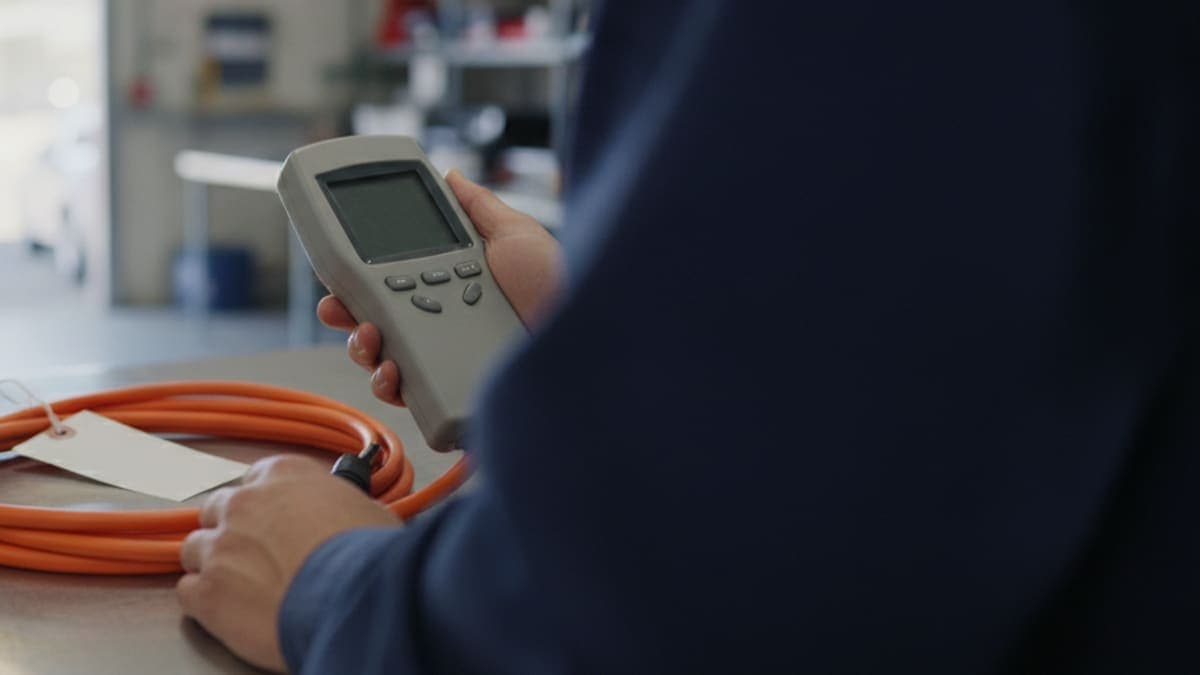
Test and tag requirements in Queensland come from the Electrical Safety Regulation 2026, not the WHS Regulation that most other states use. The Regulation sets the rules for businesses where amusement, manufacturing, office, service or rural work is done. Plug-in equipment and leads rated up to 20 amps must be inspected and tested by a competent person, at maximum intervals set by the type of work, and tagged with the result. Construction work follows AS/NZS 3012 instead. In some cases, connecting equipment to a safety switch (RCD) is a legal alternative to testing it. And if you test and tag as a business, you need an electrical contractor licence that covers the work.
The 2026 Regulation replaced the Electrical Safety Regulation 2013 on 1 September 2026. WorkSafe Queensland says it doesn't introduce new obligations, but the section numbers have changed. Many guides, client policies and tender documents still quote the 2013 sections, so this guide uses the new ones.
General information only, not legal advice. Check the current Electrical Safety Regulation 2026, WorkSafe Queensland's guidance and the relevant standards for your situation. Contact the Electrical Safety Office for licensing questions.
Why Queensland is different
In most states, test and tag duties sit in the model WHS Regulation, for example section 150 in NSW. Queensland is the exception. The Queensland WHS Regulation leaves that part out (sections 145 to 166 are marked "not used"), and workplace electrical equipment is covered by the Electrical Safety Act 2002 and its Regulation instead.
Two practical consequences for operators:
- The Regulation takes precedence over AS/NZS 3760. WorkSafe Queensland says the Regulation's requirements take precedence over the standard, and that the standard's extra guidance may still help address specific risks (WorkSafe Queensland).
- The type of work decides everything. The Regulation sorts workplaces into amusement, construction, manufacturing, office, service and rural industry work, and each has its own rules. Get the category right first.
Who the rules apply to
Part 6 of the Regulation applies to a person conducting a business or undertaking (PCBU) for electrical equipment under its management or control at a workplace (section 124). The duty sits with your client, the business that owns or controls the equipment. Your job as the tester is to do the inspection and testing competently and tag it properly, so your client can meet that duty.
The types of work are defined in section 123:
| Type of work | What it covers (summary) | Examples given in the Regulation |
|---|---|---|
| Manufacturing work | Assembly, fabrication, installation, maintenance, manufacturing, refurbishment or repair | Welding workshop, mechanic's workshop, food processing and packing |
| Office work | Administrative or professional work in the part of a workplace used as an office | Powerboards and extension leads supplying office equipment |
| Service work | Providing a service, where none of the other types apply | Cleaning a motel, cooking in a restaurant, health services, retail, teaching, childcare |
| Rural industry work | Crops, farm animals, wool, aquaculture, market gardens and preparing land for them (section 125) | Repairing farm machinery and building sheds for the farm's own use |
| Amusement work | Assembling, operating or dismantling rides, devices and sideshows at shows, fairs and carnivals (not non-profit organisations) | Sideshow food or massage stalls |
| Construction work | Construction work as defined in the WHS Regulation | Follows AS/NZS 3012 (section 140) |
What equipment has to be tested
The Regulation's term is specified electrical equipment (section 123). It means:
- cord extension sets rated at 20 A or less
- electrical portable outlet devices (powerboards) rated at 20 A or less
- other equipment rated at 20 A or less that is connected to low voltage supply by a flexible cord and plug, other than a portable safety switch
For office and service work, plug-in equipment only counts if it's moved during its normal use. Extension sets and powerboards count either way. A vacuum cleaner in a hotel or a hair dryer in a salon is included. A photocopier that sits in one spot all its life generally isn't. Extension leads and powerboards are the items most often missed, and the Regulation names them specifically.
Maximum intervals under the Regulation
These are the legal maximums in the Regulation and WorkSafe Queensland's table. They are not recommended intervals. A client's own risk assessment, insurer or site rules can require shorter ones. AS/NZS 3760's indicative intervals are a separate set, covered in our test and tag frequency guide.
| Type of work | Maximum interval | Section |
|---|---|---|
| Manufacturing: double insulated equipment | 12 months | s133 |
| Manufacturing: equipment not double insulated | 6 months | s133 |
| Office work only, unless connected to a safety switch | 5 years | s138 |
| Service work (and mixed office and service use), unless connected to a safety switch | 12 months | s138 |
| Rural work with a stated electrical risk factor, unless connected to a safety switch | 12 months | s141 |
| Amusement work: double insulated equipment | 12 months | s128 |
| Amusement work: equipment not double insulated | 6 months | s128 |
| Amusement devices and rides | Each time assembled on site, and at least every 6 months | s129 |
| Hire equipment | Before each hire (or a fitted safety switch that can't be removed), plus a full test and tag at least every 6 months | s142 |
| Construction work | Per AS/NZS 3012. WorkSafe lists 3 months for most equipment and 6 months for transportable structures, fixed and transportable equipment and construction wiring | s140 |
If you work across several sites, the test and tag interval calculator works out next-due dates from the last test, so you can check them against the rule that applies at each site.
The safety switch alternative in offices, services and rural work
This part is often misread. For office and service work, section 138 says the equipment must be either inspected and tested at the intervals above or connected to a safety switch. Rural work has a similar choice for equipment with a stated risk factor (section 141). Manufacturing and amusement work don't offer that choice: equipment must be tested and protected by a safety switch.
That doesn't mean "we have RCDs, so we don't need anything". The safety switches themselves must be tested to AS/NZS 3760 at the intervals it sets (section 139), and failed ones tagged and taken out of use. Many businesses also choose to keep a test and tag program alongside RCD protection as part of managing their electrical risk. If a client wants to rely on safety switches instead of testing, get it in writing, confirm which circuits are actually protected, and make sure the RCD testing is booked.
Rural work: stated electrical risk factors
On farms, the trigger is a stated electrical risk factor (section 141). Section 141 lists three:
- plug-in equipment used in an unroofed or wet area, such as a hose-down area
- hand-held or carried equipment whose cord flexes during use
- equipment exposed to things that cause abnormal wear, such as corrosive dust or chemicals
All specified equipment must be visually inspected before it's plugged in. Equipment involving a risk factor must be on a safety switch or tested at least yearly.
What the tag must show
After a pass, the competent person must immediately attach a durable tag stating the "prescribed details" (section 123). In short, the tag must show:
- the test date or the retest due date (at least one of them), and
- who did the test: at least one of the tester's name, the tester's or employer's electrical contractor licence number, the company name, or the tester's electrical worker licence number
The Regulation sets the minimum, but WorkSafe Queensland's guidance says the tag should show both the test date and the next scheduled test date. That's the safer standard to work to. Hire equipment tags must state the retest date (section 142).
After a fail, the tester must immediately attach a durable tag warning people not to use the item, and the item must be withdrawn from use straight away. The Regulation also says a pass tag can only be attached by the competent person who did the test, unless the equipment is new. Clients shouldn't be re-tagging equipment themselves.
Who can do the testing
The work must be done by a competent person: someone who has acquired the knowledge and skill for the task through training, qualifications, experience or a combination of these (the Regulation's dictionary). It's the PCBU's duty to decide whether someone is competent.
WorkSafe Queensland says that, as a minimum, PCBUs should look for evidence of the unit UEERL0003 Conduct in-service safety testing of electrical cord connected equipment and cord assemblies (training.gov.au). Other evidence includes recent test and tag experience, or an electrical work licence with relevant experience (WorkSafe Queensland eSAFE, May 2023).
Licence rules for test and tag businesses
This is where Queensland really differs from most states. The individual doing the testing generally needs competence, not a licence. But WorkSafe Queensland says a business that performs testing and tagging work must hold an electrical contractor licence permitting that work. If you don't hold any contractor licence, it says to contact the Electrical Safety Office about your licensing requirements (WorkSafe Queensland eSAFE, May 2023).
The same guidance makes two more points:
- If you already hold a restricted electrical contractor licence, check whether it covers testing and tagging or needs an extra endorsement.
- A restricted contractor licence endorsed only for testing and tagging doesn't allow repairs. Repairing electrical equipment without the right electrical work licence is an offence under the Electrical Safety Act 2002.
WorkSafe also says licences issued under the 2013 Regulation continue under the 2026 Regulation, with no action needed. If you're starting out, our guide on how to start a test and tag business covers training, insurance and pricing as well as licensing.
Records: what Queensland requires
For most workplaces, the Regulation's requirement is the tag itself. It doesn't set a general retention period for test records in offices, shops or workshops. There are two exceptions:
- Hire companies must keep records of the six-monthly tests for at least 5 years (section 142).
- Amusement devices and rides need a written record of each test and the prescribed details (section 129).
Even where the law only asks for a tag, a register is what lets your client show an inspector or insurer what was tested, by whom, when and with what result. It's also how you know which items are due next month. Keep each item's history, test readings, results and what happened to failed items, not only the current tag.
A Queensland checklist for each client
- Classify each site or area by type of work. A school has office areas, service areas and possibly a workshop that counts as manufacturing work.
- List the specified equipment, including every extension lead and powerboard.
- Check safety switch protection where the client is relying on it, and book the RCD testing.
- Set the interval at or below the legal maximum, and shorter if the client's risk assessment, insurer or site rules require it.
- Tag every item with the prescribed details, and tag out and withdraw failures on the spot.
- Keep the register and give the client a copy of the results.
- Check your own licence covers the work you're doing for that client.
Keeping Queensland sites on track
The legal intervals differ by type of work, so one client can have items due at 6, 12 and 60 months. That's hard to track on paper. Koalaris keeps a register for every client and site, works out next-due dates from each test, and prints tags with the test details from the Koalaris test and tag app, even offline. Clients can check their own status in a free portal. Plans start at $29 a month for the Solo plan, and every new business gets a 14-day trial with no card needed.
Frequently asked questions
Is test and tag mandatory in Queensland?
For the workplaces it covers, yes. The Electrical Safety Regulation 2026 requires specified electrical equipment used in manufacturing, amusement, office, service and rural work to be inspected, tested and tagged at set maximum intervals. In office, service and some rural work, connecting the equipment to a safety switch is an alternative to testing. Construction sites follow AS/NZS 3012. These rules apply to businesses and undertakings at workplaces, so a household's own appliances generally aren't covered.
How often does office equipment need to be tested in Queensland?
Under section 138, specified equipment used only for office work must be tested at least every 5 years, unless it's connected to a safety switch. If the same equipment is also used for service work, the maximum is 12 months. A client can choose shorter intervals.
Do I need a licence to test and tag in Queensland?
The person doing the testing needs to be competent, and UEERL0003 is the usual minimum evidence. A business that does testing and tagging work needs an electrical contractor licence permitting that work, according to WorkSafe Queensland. Contact the Electrical Safety Office if you aren't sure what your business needs.
What happened to the Electrical Safety Regulation 2013?
It expired on 31 August 2026 and was replaced by the Electrical Safety Regulation 2026 from 1 September 2026. WorkSafe Queensland says the remake doesn't introduce new policy or obligations, but every section was renumbered. The definition of specified electrical equipment, for example, is now in section 123. WorkSafe has published a comparison table to find the old sections.
Does AS/NZS 3760 apply in Queensland?
Yes, but the Regulation comes first. The Regulation sets the legal maximum intervals for specified equipment and requires safety switches to be tested to AS/NZS 3760. WorkSafe Queensland says the Regulation's requirements take precedence over the standard, and the standard's extra guidance may still help with specific risks.

Mohammed spent seven years in equipment maintenance, electrical safety testing and medical equipment servicing before building Koalaris. He holds a Test & Tag qualification and a Queensland Restricted Electrical Licence.
Keep reading
 Guides
How to choose test and tag software: a buyer's checklist
A practical checklist for choosing test and tag software in Australia: offline use, records, imports, tags, invoicing, client access, exports and total cost.
 Guides
How to start a test and tag business in Australia
Training, licences, ABN and GST, insurance, equipment costs, pricing, records and finding clients: a practical guide to starting a test and tag business.
 How-to
Outgrowing SwiftPAT? When a test and tag business needs more than a phone app
SwiftPAT is a quick, low-cost Android app for solo testers. When you add staff, clients or invoicing, here's what changes and how to bring your records across.
See your register the way Lyra sees it.
Start a 14-day free trial of Pro. No card needed.