Test and tag requirements in WA: what the WHS laws say
Is test and tag mandatory in WA? What the WHS (General) Regulations 2022 require, WorkSafe WA's suggested intervals, who can test, RCDs and records to keep.
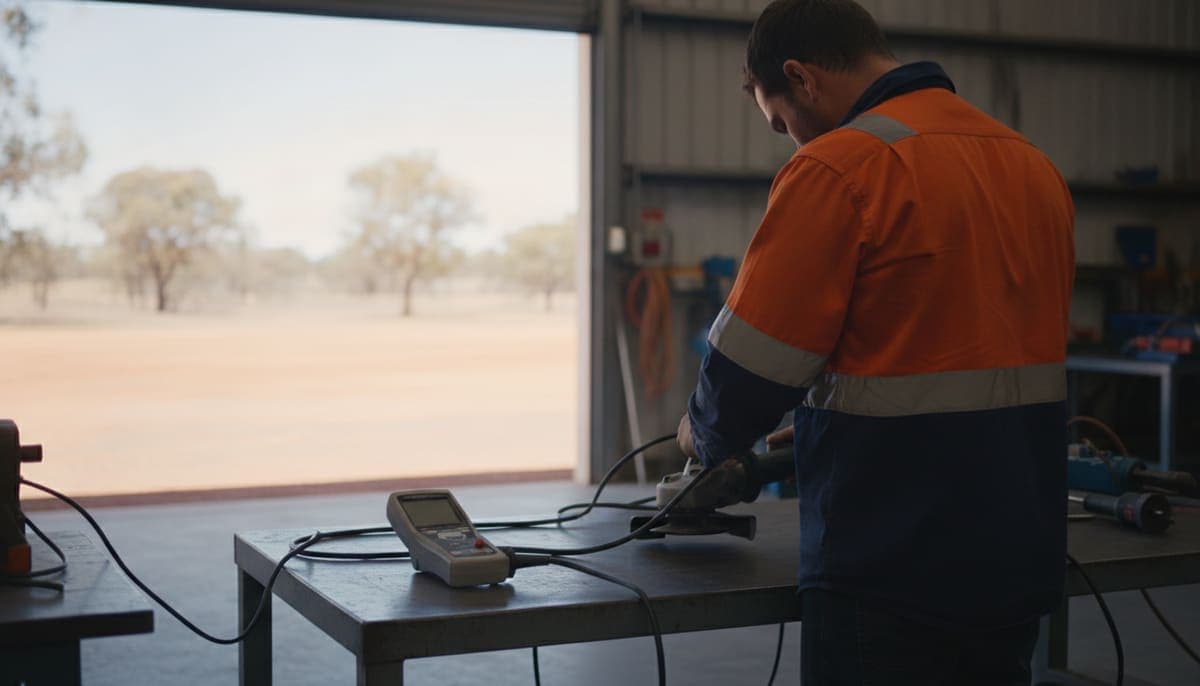
Test and tag requirements in WA come from the Work Health and Safety (General) Regulations 2022, which replaced the old Occupational Safety and Health Regulations 1996 for most workplaces when WA's WHS laws started on 31 March 2022. Regulation 150 says a business must have plug-in equipment regularly inspected and tested by a competent person if it's used where normal use is likely to damage it or shorten its life. WA defines that competent person more tightly than the other model-law states, WorkSafe WA's code of practice suggests testing at least every 12 months in those environments, and construction sites must follow AS/NZS 3012.
General information only, not legal advice. Check the current Work Health and Safety (General) Regulations 2022, WorkSafe WA's Managing electrical risks in the workplace code of practice and the relevant standards for your situation. For licensing questions, contact Building and Energy.
What changed in 2022
A lot of WA test and tag advice online still quotes the Occupational Safety and Health Regulations 1996, including WorkSafe WA's own older guide and training page. Those were written before the WHS laws started. For most workplaces, the rules now sit in the WHS (General) Regulations 2022, and mining workplaces have matching rules in the WHS (Mines) Regulations 2022. WorkSafe WA's 2025 code of practice cites both sets side by side.
| Document | What it does | Binding? |
|---|---|---|
| Work Health and Safety (General) Regulations 2022 (WA), Part 4.7 | Testing of plug-in equipment in hostile environments, test records, RCDs, and AS/NZS 3012 on construction sites | Yes |
| WorkSafe WA code of practice: Managing electrical risks in the workplace (2025) | Explains the regulations and gives example test intervals | Guidance. It shows what WorkSafe WA considers a practical way to meet the duty |
| AS/NZS 3760 | How to inspect and test, plus indicative intervals | Not law on its own. The code refers to it for intervals |
| AS/NZS 3012:2010 | Electrical installations on construction and demolition sites | Yes on construction sites, because regulation 163 requires compliance |
| Electricity (Licensing) Regulations 1991 | Who can do electrical work, such as repairs | Yes. Regulated by Building and Energy |
The code still refers to AS/NZS 3760:2010 in places. The current edition is AS/NZS 3760:2022, so use that for your test methods and check whether a client's policy names a specific edition.
Is test and tag mandatory in WA?
Yes, for some equipment. Regulation 150 says a person conducting a business or undertaking (PCBU) must make sure electrical equipment is regularly inspected and tested by a competent person if it is:
- supplied with electricity through a socket outlet, and
- used in an environment where its normal use exposes it to conditions likely to damage it or shorten its life, including moisture, heat, vibration, mechanical damage, corrosive chemicals or dust.
The code's examples of these higher risk environments are wet or dusty areas, outdoors, workplaces that use corrosive substances, commercial kitchens and manufacturing. It suggests a risk assessment to work out which areas at a workplace qualify.
At the time of writing, the maximum fine for breaching regulation 150 is $4,200 for an individual and $21,000 for a body corporate.
Offices, shops and classrooms
The code describes offices, retail shops and classrooms as lower risk, where equipment isn't normally exposed to damaging conditions. Regulation 150 doesn't name them, but the code says equipment in lower risk workplaces may still need inspecting and testing less often, and points to AS/NZS 3760 and the manufacturer's advice. Many clients test anyway because an insurer, landlord or head contractor asks for it.
New and second-hand equipment
Brand new equipment that has never been used doesn't need testing before first use, but it must be inspected for obvious damage. The code suggests recording the date it went into service, or fitting a "new to service" tag showing when the first test is due. Second-hand equipment should be tested before its first use, and anything repaired or serviced should be tested before it goes back into use.
Untested equipment
If equipment needs testing under regulation 150 and hasn't been tested, the business must make sure, so far as is reasonably practicable, that it isn't used. Regulation 149 adds that unsafe equipment must be disconnected and not reconnected until it has been repaired or tested and found safe, or replaced or permanently removed.
How often to test in WA
The regulations say "regularly" and don't set intervals. WorkSafe WA's code gives these examples:
| Equipment or environment | Example interval in the code |
|---|---|
| General rule for higher risk operating environments | At least once every 12 months |
| Manufacturing and workshop environments | At least once every six months |
| Commercial cleaning equipment | At least once every six months |
| Hire equipment | Inspect at the start of each hire, test every three months |
The code also says to take a competent person's advice on intervals, and points to AS/NZS 3760 and the manufacturer's recommendations. We've summarised the standard's indicative intervals in our test and tag frequency guide.
AS/NZS 3760 doesn't cover medical devices or equipment in patient care areas. The code points to AS/NZS 3551 and AS/NZS 3003 for those.
Construction and demolition sites
Regulation 163 says a business that carries out construction work must comply with AS/NZS 3012:2010, Electrical installations: Construction and demolition sites. Where the standard deals with the same matter as the general electrical rules, complying with the standard is enough. The fine for breaching regulation 163 is up to $35,000 for a body corporate.
AS/NZS 3012 has its own, shorter retest intervals and its own rules for site RCDs, leads and tagging. We cover them in our guide to test and tag on construction sites. Head contractors in WA often set extra rules on top, such as a site colour-tag rotation, so ask for the site's requirements before you start.
Who can test and tag in WA
This is where WA differs from the other states that adopted the model WHS laws. The WA regulations define a competent person for inspecting and testing electrical equipment as someone who "has satisfactorily completed a competency-assessed training course on testing and tagging" with a pass-fail portable appliance tester.
The code adds that a competent person also includes someone licensed or registered to do electrical work, such as a licensed electrician. It says the training should leave the tester able to:
- use the test equipment safely and effectively
- understand electrical risks and the role inspection and testing play
- understand AS/NZS 3760, and AS/NZS 3012 if they test for construction or demolition sites
- understand the legal requirements that apply to the work
The tester should also be able to interpret their results. The nationally recognised unit for this work is UEERL0003 Conduct in-service safety testing of electrical cord connected equipment and cord assemblies. Keep your statement of attainment handy, because clients and site managers often ask for it.
Licences and repairs
Electrical work in WA is licensed under the Electricity (Licensing) Regulations 1991 and regulated by Building and Energy. Repairing faulty equipment, such as replacing a plug or a damaged cord, can be electrical work that needs a licence. Live testing beyond pass/fail test and tag can also count: Building and Energy has fined a manufacturer $15,000 for letting unlicensed staff test units plugged into 240-volt mains on a production line. If you want to offer repairs or any testing outside AS/NZS 3760, check with Building and Energy first.
RCDs (safety switches)
Two WA regulations cover RCDs:
- Regulation 164. Where equipment is used in a hostile environment, moved between locations where damage is likely, frequently moved in normal use, or used with an amusement device, the business must, so far as is reasonably practicable, protect the socket outlet supply with an appropriate RCD. For socket outlets up to 20 amps, it must trip at no more than 30 milliamps.
- Regulation 165. The person with management or control of a workplace must take all reasonable steps to have RCDs tested regularly by a competent person. The code says this covers fixed RCDs too. Records of RCD testing, other than daily push-button tests, must be kept until the device is next tested or permanently removed from use. A faulty RCD must be taken out of service and replaced as soon as possible.
For push-button and trip-time intervals, see our guide to RCD testing frequency.
What records to keep in WA
Regulation 150 says the test record must show:
- the name of the person who did the test
- the date of the test
- the outcome
- the date the next test is due
The record must be kept until the equipment is next tested, permanently removed from the workplace or disposed of. The fine for not keeping it is up to $7,000 for a body corporate.
The record can be the tag itself. But the code points out that a tag may not fit everything, and that a logbook, database or register gives a permanent backup if tags are damaged or removed, makes internal audits easier and lets you record more detail. If you don't use tags, the equipment must be marked so the records clearly identify each item.
The code says a test tag should be durable, water resistant, non-metallic, self-adhesive or well secured, impossible to reuse, and brightly coloured. It may be colour-coded by the month of the test.
A WA checklist for each client
- Check whether it's a construction or demolition site. If it is, AS/NZS 3012 applies. If it's a mine, check the WHS (Mines) Regulations.
- Identify the higher risk areas, such as kitchens, workshops, outdoor and wet areas, and write down why.
- List the plug-in equipment in those areas, including leads, powerboards and portable RCDs.
- Agree intervals using the code's examples, AS/NZS 3760:2022 and anything the client's insurer or contracts require.
- Schedule RCD testing, fixed and portable.
- Record every test with the four required details, and tag out anything that fails.
- Give the client the register, and keep your own copy.
Keeping WA clients on track
With intervals ranging from three months for hire gear to 12 months for a client's kitchen, and AS/NZS 3012 on construction sites, every client ends up with its own schedule. Koalaris keeps a register for each client and site, records tests in a field app that works offline, prints test tags and produces certificates. Clients can check their own records in a free portal. Every business can start on the Free plan with no card and no end date, and the Solo plan adds invoicing for $29 a month. See how it works on the Koalaris test and tag app page.
Frequently asked questions
Is test and tag a legal requirement in WA?
For plug-in equipment used in hostile environments, yes. Regulation 150 of the WHS (General) Regulations 2022 requires it to be regularly inspected and tested by a competent person, with a record kept. Construction sites must also comply with AS/NZS 3012. For low risk areas like offices, WorkSafe WA's code says less frequent testing may still be needed.
Do I need a licence to test and tag in WA?
Not for pass/fail testing with a portable appliance tester, as long as you've completed a competency-assessed test and tag course. Licensed electricians also count as competent. Repairs, and live testing beyond AS/NZS 3760, can be electrical work that needs a licence, so check with Building and Energy.
How often should equipment be tested in WA?
The regulations say "regularly". WorkSafe WA's code suggests at least every 12 months in higher risk environments, every six months for manufacturing, workshop and commercial cleaning equipment, and every three months for hire equipment. Construction sites follow AS/NZS 3012.
Do the Occupational Safety and Health Regulations 1996 still apply to test and tag?
For most workplaces, no. Since 31 March 2022, test and tag duties sit in the Work Health and Safety (General) Regulations 2022, with matching rules for mines in the WHS (Mines) Regulations 2022. Older guides that cite the 1996 regulations can be out of date.
How long do I keep test and tag records in WA?
Until the equipment is next tested, permanently removed from the workplace or disposed of. Many businesses keep the full history anyway, because it helps with insurers and audits.

Koalaris is test and tag software built in Australia. See what it does.
Keep reading
 How-to
Metrel ES Manager export: getting your test and tag records into a cloud register
How to export test and tag records from Metrel ES Manager to Excel, what the Basic and Pro exports contain, and how to bring them into a cloud register.
 Guides
Getting paid on the day: invoicing for test and tag businesses
What a test and tag invoice must show, how to lay out per-item lines, payment terms that work, card payments on site after the 2026 surcharge ban, and chasing.
 Guides
Test and tag on construction sites: AS/NZS 3012 requirements
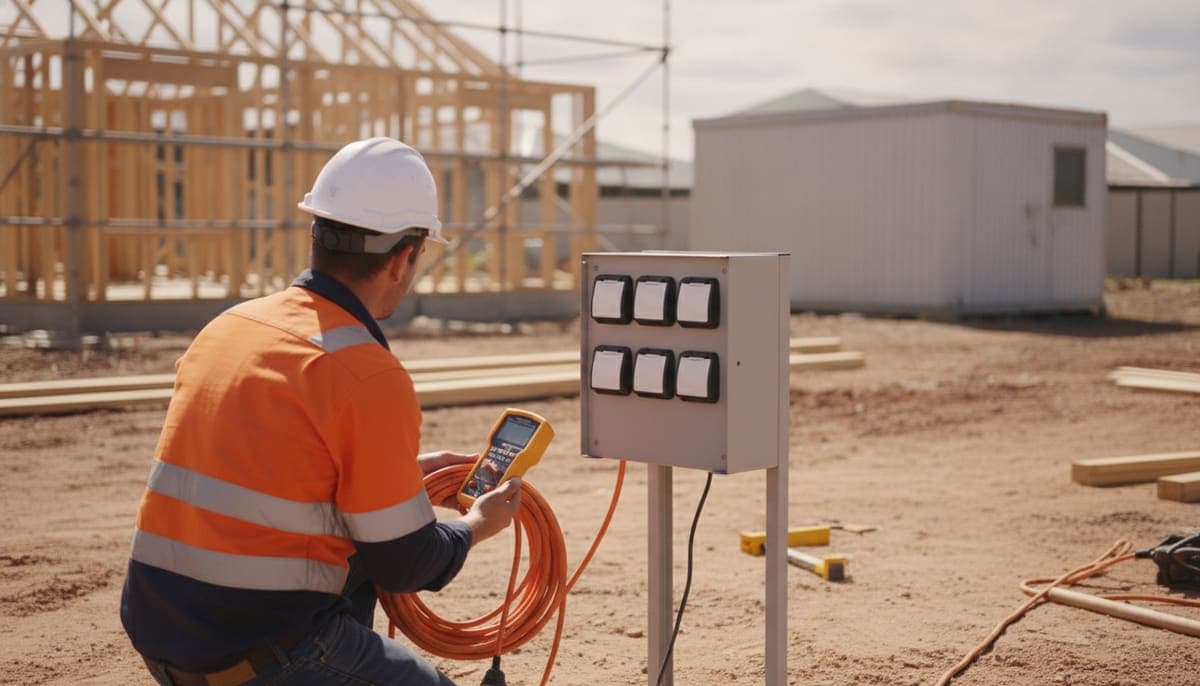
Construction site test and tag requirements under AS/NZS 3012: 3-monthly retests, RCD checks, site tags, records, and how operators quote and run site work.
See your register the way Lyra sees it.
Start free, for as long as you like. No card needed.