Test and tag in New Zealand: what's the same as Australia and what's different
Is test and tag mandatory in NZ? What the Electricity (Safety) Regulations 2010 say, the hire and rental rule, RCDs, who can test, and how NZ differs.
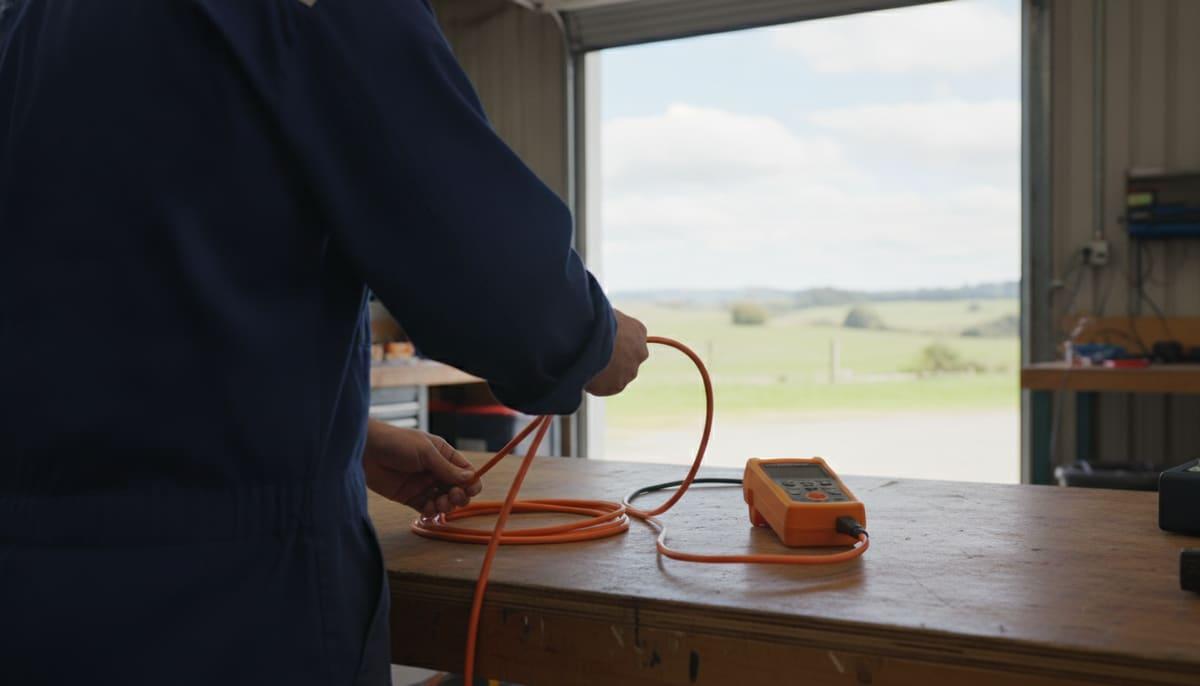
Test and tag in NZ works to the same standard as Australia, AS/NZS 3760, but the law around it is different. In New Zealand there is no general legal requirement to test and tag plug-in equipment. Instead, the Electricity (Safety) Regulations 2010 say a business must not use or let anyone use electrically unsafe appliances, and regulation 26 treats an appliance with a current AS/NZS 3760 tag as deemed electrically safe. Test and tag is the most common way to show that, not the only one. WorkSafe New Zealand also says no formal qualification or licence is needed to test and tag.
If you test in Australia and are picking up New Zealand clients, or you're starting out in NZ and reading Australian advice online, this guide sets out what carries across and what doesn't.
General information only, not legal advice. Check the current Electricity (Safety) Regulations 2010, WorkSafe New Zealand's guidance on plug-in electrical appliances and the standards that apply to your situation. For questions about electrical work and registration, contact WorkSafe or the Electrical Workers Registration Board.
Australia and New Zealand side by side
| Australia | New Zealand | |
|---|---|---|
| Main law | State WHS or OHS laws. Most states have a regulation requiring testing of plug-in equipment in hostile environments | Electricity (Safety) Regulations 2010, plus the general duties in the Health and Safety at Work Act 2015 |
| Is test and tag mandatory? | Yes for some equipment and workplaces, depending on the state | No general legal requirement, according to WorkSafe NZ |
| Role of AS/NZS 3760 | Referred to by codes of practice for test methods and intervals | A current AS/NZS 3760 tag makes an appliance deemed electrically safe under regulation 26 |
| Edition cited | Varies by regulator and code | AS/NZS 3760:2022, in the regulations' list of standards |
| Who can test | A competent person. WA requires a competency-assessed course, and Queensland needs an electrical contractor licence for a test and tag business | WorkSafe NZ says no formal qualification or licence is required |
| Construction sites | AS/NZS 3012 | AS/NZS 3012:2019, with NZ modifications listed in the regulations |
The Australian column is a summary. Our state-by-state guide to test and tag requirements has the detail for each state.
Is test and tag mandatory in NZ?
Not in general. WorkSafe New Zealand puts it plainly: there is no legal requirement for testing and tagging of in-service appliances and leads, either at work or at home. That surprises a lot of people, because many clients, insurers and head contractors ask for it anyway.
What the law does require is that equipment is safe. Regulation 15 of the Electricity (Safety) Regulations 2010 says a person who owns or operates fittings or appliances must not use them, or let anyone else use them, if they are electrically unsafe. Using equipment knowing it's unsafe, or being reckless about it, is an offence.
The Health and Safety at Work Act 2015 adds the broader duty. Under section 36, a person conducting a business or undertaking (PCBU) must ensure, so far as is reasonably practicable, the health and safety of workers and others affected by the work. Plug-in equipment is part of that.
What "deemed electrically safe" means
Regulation 26 applies to appliances, other than electrical medical devices, used by the owner's employees or contractors, by someone hiring or leasing them, or by the occupier of rented premises. For equipment used by the owner's own employees or contractors, it says the appliance is deemed to be electrically safe if it has a current tag issued in accordance with AS/NZS 3760.
In practice, that's why NZ businesses test and tag: a current tag is a clear, recognised way to show the equipment meets the safety rule. WorkSafe describes AS/NZS 3760 as "an option" for businesses to ensure compliance.
What test and tag doesn't replace
WorkSafe is clear that a tag only confirms the equipment was safe when it was tested. It says test and tag shouldn't be relied on alone, and that equipment must still be RCD-protected in certain circumstances, such as damp conditions, and checked by users for visible damage. For a stationary office appliance, WorkSafe says an RCD-protected supply and periodic visual checks of cords and equipment may be enough. How far a business goes should match its risk.
Hire equipment and rental properties
This is one place where New Zealand has a specific rule. Regulation 26 covers appliances supplied under a hire or lease agreement, and appliances supplied with rented or leased premises. These are deemed electrically safe if either:
- they have a current tag issued in accordance with AS/NZS 3760, or
- when first made available to the hirer, lessee or occupier, they're supplied through a portable RCD, or a circuit protected by an electrically safe RCD, that protects against electric shock.
Regulation 15 also says a person must not hire out or lease appliances that are electrically unsafe at the start of the hire or lease. So hire companies, and landlords who supply appliances, are natural test and tag clients in NZ. Agree with them which route they're using, and test at the intervals AS/NZS 3760 sets for hire equipment. Our test and tag frequency guide summarises the standard's intervals, and because AS/NZS 3760 is a joint standard, those intervals apply on both sides of the Tasman.
Who can test and tag in New Zealand
WorkSafe says no formal qualification or licence is required to test and tag, and that it's up to a business whether it trains its own staff or uses a third party. If it hires someone, it must make sure the tester has the training to do the assessments.
Two practical points follow:
- Clients will still ask about training. Larger clients and construction sites often want evidence of a test and tag course and of the tester's competence, so keep your certificates handy.
- Testing isn't repairing. WorkSafe notes that a tester who isn't a qualified electrician won't be able to fix the problems their results reveal. Electrical work in New Zealand is regulated, and doing prescribed electrical work generally requires registration with the Electrical Workers Registration Board. If you want to offer repairs as well as testing, check with WorkSafe or the EWRB first.
RCDs
Regulation 24 sets out when an RCD is deemed electrically unsafe, including trip-time limits and a requirement that portable RCDs either open automatically or keep protecting if the supply voltage fails. RCD testing sits within AS/NZS 3760:2022, whose full title is In-service safety inspection and testing of electrical equipment and RCDs.
Because WorkSafe leans so heavily on RCD protection as the main safeguard, NZ clients often want their portable RCDs and fixed safety switches checked as part of the visit. For push-button and instrument test intervals, see our guide to RCD testing frequency.
Construction and demolition sites
Regulation 25 says installations, fittings and appliances on construction sites are deemed electrically safe if they comply with, and are used in accordance with, AS/NZS 3012. The regulations list AS/NZS 3012:2019, including Amendment 1, with some New Zealand modifications.
WorkSafe notes that on a busy site with several businesses, test and tag gives confidence that equipment is regularly checked, but that extra monitoring, such as visual checks for damaged cords and missing guards, may be needed. AS/NZS 3012 has its own retest intervals, which we cover in our guide to test and tag on construction sites.
Records
Unlike most Australian WHS regulations, the NZ regulations don't list what a test record must contain. The tag itself is what regulation 26 refers to. AS/NZS 3760 still expects records of each test, and clients, insurers and auditors will ask for them, so keep the same register you would in Australia: each item, its test results, who tested it, when, and when it's next due.
A register also covers you when a tag falls off or is removed, and shows a client which items are due before their tags expire.
A New Zealand checklist for each client
- Ask why they want testing. Insurer, head contractor, hire business, landlord or their own risk assessment. It shapes the scope.
- Check whether it's a construction or demolition site. If it is, work to AS/NZS 3012.
- Check RCD protection for equipment used in damp or outdoor conditions, and include portable RCDs in the job.
- For hire and rental equipment, agree the route: a current AS/NZS 3760 tag, or RCD protection when it's first supplied.
- Agree intervals using AS/NZS 3760:2022 and anything the client's insurer or contracts require.
- Record every test and tag out anything that fails.
- Give the client the register and keep your own copy.
Running a test and tag business across the Tasman
The testing is the same, but the paperwork isn't. Koalaris keeps a register for every client and site, records tests in a field app that works offline, prints tags and produces certificates, and clients can check their own records in a free portal. Choose New Zealand when you sign up and your invoices are in NZ dollars with 15% GST, dates are in New Zealand time, and clients can pay by card into your own NZ Stripe account. You can start on the Free plan with no card and no end date, and paid plans are the same numbers in NZ dollars. See how it works on our test and tag software for New Zealand page.
Frequently asked questions
Is test and tag a legal requirement in New Zealand?
No, not in general. WorkSafe New Zealand says there's no legal requirement to test and tag in-service appliances and leads. The Electricity (Safety) Regulations 2010 do require that equipment isn't electrically unsafe, and a current AS/NZS 3760 tag means an appliance is deemed electrically safe.
Do I need a licence to test and tag in NZ?
WorkSafe says no formal qualification or licence is required to test and tag. Businesses that hire a tester must make sure they have the training to do the work. Repairs can be prescribed electrical work, which generally needs EWRB registration.
Which edition of AS/NZS 3760 applies in New Zealand?
The Electricity (Safety) Regulations 2010 list AS/NZS 3760:2022, In-service safety inspection and testing of electrical equipment and RCDs. Check the current regulations, as the list of cited standards is updated from time to time.
Do hire companies in NZ have to test and tag?
Hired and leased appliances are deemed electrically safe if they have a current AS/NZS 3760 tag, or if they're supplied through RCD protection when first made available to the hirer. They must not be electrically unsafe at the start of the hire.
How often should equipment be tested in New Zealand?
The NZ regulations don't set intervals. Most businesses use the intervals in AS/NZS 3760:2022, which are the same in Australia and New Zealand, and AS/NZS 3012 on construction sites. Insurers and contracts can set shorter ones.

Koalaris is test and tag software built in Australia. See what it does.
Keep reading
 Guides
Test and tag for events and markets: a guide for operators
Test and tag for events and markets: what organisers and councils ask stallholders for, AS/NZS 3002, leads and RCDs, and how operators run event-day testing.
 How-to
Test and tag register template (free CSV) and how to fill it in
Download a free test and tag register template in CSV. What each column means, the extra columns worth adding, and how to stop Excel breaking your tag numbers.
 Guides
Changing test and tag software without losing your history
Changing test and tag software? When to switch in the retest cycle, how to keep your tags, asset numbers and old certificates, and what to tell your clients.
See your register the way Lyra sees it.
Start free, for as long as you like. No card needed.