Test and tag for hire equipment: rules, intervals and records for hire businesses
Test and tag rules for hire equipment in Australia: checks before each hire, 3 and 6-month cycles by state, RCDs, failed returns and the records to keep.
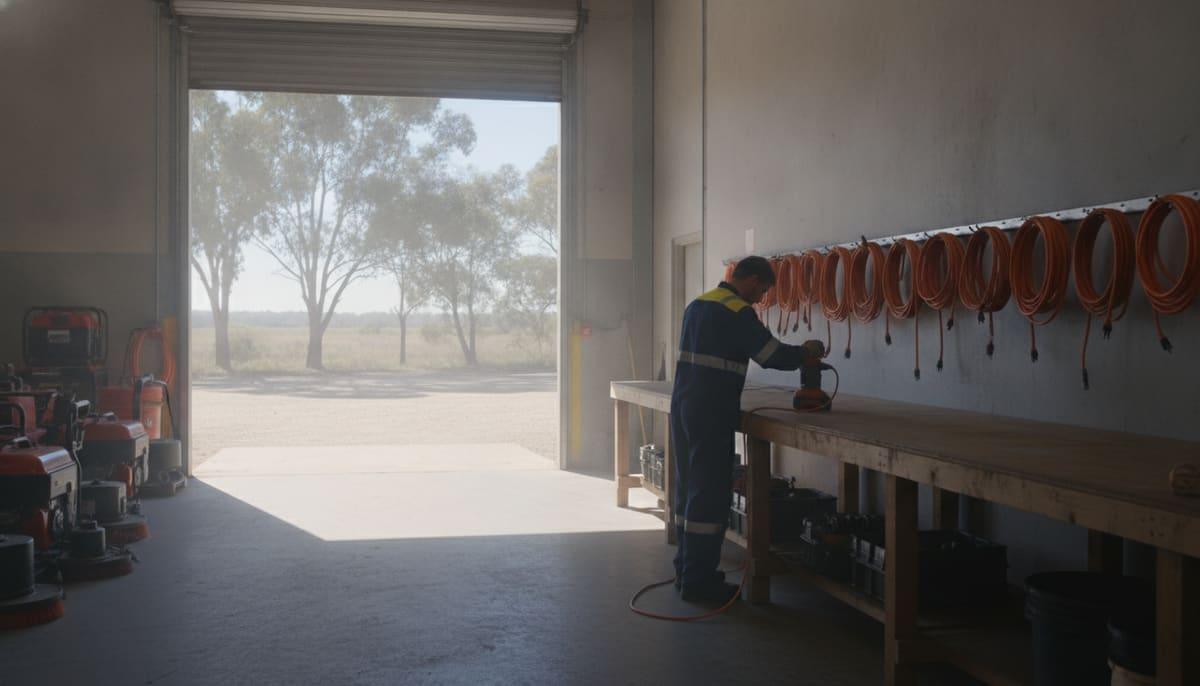
Test and tag for hire equipment works on a much shorter cycle than for equipment that stays in one workplace. In most of Australia, regulators expect a hire business to inspect each item at the start of every hire and test and tag it every 3 months. Queensland writes its own rule into law: inspect and test before each hire (unless the item has a safety switch that can't be removed), plus a full test and tag at least every 6 months, with records kept for 5 years.
This guide covers the rules by state, who is responsible once the gear leaves the yard, RCDs, what to do with damaged returns, and how to keep the records straight when half your fleet is out on hire on any given day. It's written for hire businesses that test in-house and for test and tag operators who service hire yards.
General information only, not legal advice. Check the current edition of AS/NZS 3760, and your state or territory regulator, before you set a schedule.
Hire equipment rules by state
| Where | What's expected for hire equipment | Status |
|---|---|---|
| Queensland | Inspect and test before each hire, unless fitted with a safety switch that can't be disconnected, deactivated or removed. Inspect, test and tag at least every 6 months. Keep records of the 6-monthly tests for at least 5 years. | Law: Electrical Safety Regulation 2026, s142 |
| NSW, WA, NT | Inspect at the start of each hire and test every 3 months | Codes of practice and regulator guidance |
| SA | Inspect prior to hire, including an RCD push-button test by the hirer. Test and tag every 3 months. | SafeWork SA table based on AS/NZS 3760:2022 |
| Victoria (construction sites) | Hire equipment should be tested and inspected before delivery, and may need retesting during the hire | WorkSafe Victoria industry standard |
| New Zealand | Hired appliances are deemed safe with a current AS/NZS 3760 tag, or if supplied through RCD protection when first made available | Electricity (Safety) Regulations 2010, reg 26 |
Sources: Queensland Electrical Safety Regulation 2026, WorkSafe Queensland, SafeWork NSW code of practice, WorkSafe WA code of practice, NT WorkSafe, SafeWork SA, WorkSafe Victoria.
A few things are worth knowing about that table:
- Queensland is the only state where the hire interval is written into the regulation itself. Its 6-month maximum is longer than the 3 months in other states' guidance, but its pre-hire requirement is a test, not just a look. Our Queensland test and tag requirements guide covers the rest of the Regulation.
- Elsewhere, the 3-month figure comes from codes of practice and guidance. A code isn't the regulation, but regulators and courts can refer to it when deciding whether a business has met its duty. Outside Queensland, 3 months is the safest figure to work to.
- Your customers can set a shorter cycle. Construction sites work to AS/NZS 3012, which commonly runs on a 3-month cycle, and site rules or contracts can be stricter again. Our test and tag frequency guide explains how the standard's intervals work for each environment.
Queensland's domestic hire exception
Queensland treats equipment hired for use in a home differently. The 6-monthly test doesn't apply to domestic electrical equipment (computers, whitegoods and browngoods) hired for use in a domestic situation, such as a fridge or TV hired for a unit. The before-each-hire inspection and test still applies.
The Regulation's own example makes the line clear: a fridge hired for a house is domestic, but the same fridge hired for a mechanic's workshop is not. If you hire appliances to both, record the intended use on the hire agreement so you know which rule applies to each item.
Who is responsible once the gear leaves the yard
The hire business carries the inspection and testing duty for its fleet. The customer has duties too:
- NT WorkSafe says the business using hired equipment must make sure that, for the period of the hire, it meets all the inspection and testing requirements that apply to the customer's own workplace.
- WorkSafe Queensland notes that a business hiring equipment may have its own extra requirements depending on its work. Where the customer has to test at the same interval or a shorter one, the hire company may be able to arrange for its required tests to be done as part of the customer's testing. Where the customer's interval is longer, the hire company has to arrange the tests itself.
In practice, that means long hires are where gaps appear. A generator or a set of site lights on a six-month hire will pass a 3-month due date while it's on the customer's site. Agree up front who tests it when it falls due, and put that in the hire terms.
RCDs and safety switches on hire gear
SafeWork SA's table, based on AS/NZS 3760:2022, sets these for hire equipment:
- Before each hire: the inspection includes a push-button test of RCDs by the hirer.
- Portable RCDs: operating time and push-button test every 3 months.
- Fixed RCDs: operating time and push-button test every 12 months.
In Queensland, if you rely on a fitted safety switch instead of testing before each hire, that safety switch must itself be inspected, tested and tagged at least every 6 months and comply with AS/NZS 3760 when tested. A push-button test only checks the trip mechanism works. The operating time test, done with an RCD tester, checks it trips fast enough.
A check-in, check-out routine that keeps you compliant
Regulations tell you the intervals. They don't tell you how to run a busy counter. This is a routine many hire businesses use. Treat it as common practice, not a legal requirement, and adjust it to your fleet.
When an item comes back:
- Look it over before it goes back on the shelf: lead, plug, housing, guards and any signs of water or heat damage.
- Anything damaged goes straight to a quarantine area with a "do not use" tag, not back into the hire pool.
- Note any damage against the hire record while the customer is still there, if you can.
Before it goes out again:
- Do the pre-hire inspection, including the RCD push-button test where the item has one. In Queensland, test it too unless it has a safety switch that can't be removed.
- Check the tag date. If the item will fall due during the hire, test it now rather than send it out with a tag that will expire on the customer's site.
- Record who checked it and when, against the item, so you can show it later.
Failed items and repairs: in Queensland, an item that fails its 6-monthly test must be tagged with a durable "do not use" tag and withdrawn from use straight away. SafeWork SA points to AS/NZS 5762 for equipment after repair or service, or when it's reintroduced to service. Our guide to what to do with failed test and tag items covers tagging out, repair records and retesting.
Records a hire business should keep
NT WorkSafe lists what a test record must include:
- the name of the person who did the testing
- the date of the testing
- the outcome
- the date the next test is due
The record can be a tag, but NT WorkSafe recommends a logbook, register or database as well, because tags get damaged or pulled off. For a hire fleet that's not optional in practice: you need to find every item that falls due next month, wherever it is.
In Queensland, passing hire items get a durable tag that states the retest date, and records of the 6-monthly tests must be kept for at least 5 years.
Good hire records also tie each test to an asset number that matches the item, not just a description. "Generator, 5 kVA" doesn't help when you own twelve of them.
For test and tag operators: servicing hire yards
Hire businesses are good clients for an operator. The work comes back every 3 months (or every 6 in Queensland), the volume is high, and the gear is often already sorted on racks. A few things make the job go smoothly:
- Agree what's in scope. Fleet items only, or the workshop and office too? Those may run on different intervals.
- Plan for items out on hire. Book a return visit, or agree that the yard tests anything that comes back after your visit falls due.
- Use their asset numbers. Matching your records to the stickers on their gear saves time on every visit.
- Quote for volume. Per-item pricing with a minimum visit charge suits most yards.
Keeping a hire fleet's register in Koalaris
Koalaris keeps an equipment register for every client and site, records tests in a field app that works offline, and prints test tags on the spot. You can give a site its own asset numbering, such as SRM1001, and those numbers work in search and when scanning, and print large on the tag. You set the retest interval for each client's environment, so a hire fleet can run on its own short cycle. Every business can start on the Free plan, with no card and no end date. See how it works on the Koalaris test and tag app page.
Frequently asked questions
How often does hire equipment need to be tested and tagged?
In NSW, WA, the NT and SA, regulator guidance is to inspect at the start of each hire and test every 3 months. In Queensland, the law requires an inspection and test before each hire (unless the item has a safety switch that can't be removed) and a full test and tag at least every 6 months.
Does hire equipment need to be tested before every hire?
It needs to be inspected before every hire everywhere. In Queensland it must also be tested before each hire, unless it's fitted with a safety switch that can't be disconnected, deactivated or removed during operation.
Who is responsible for testing hired equipment during a long hire?
The hire business is responsible for its fleet. The customer must also make sure the equipment meets the testing rules that apply to their own workplace while they have it. Agree in the hire terms who tests an item that falls due while it's on hire.
How long does a hire business need to keep test records?
In Queensland, records of the 6-monthly tests must be kept for at least 5 years. In the NT, a test record must be kept until the item is next tested, permanently removed from the workplace or disposed of.
Is hired equipment in New Zealand treated differently?
Yes. Hired appliances are deemed electrically safe if they have a current AS/NZS 3760 tag, or if they're supplied through RCD protection when first made available to the hirer. Regulation 15 also says appliances must not be electrically unsafe at the start of the hire.

Koalaris is test and tag software built in Australia. See what it does.
Keep reading
 Guides
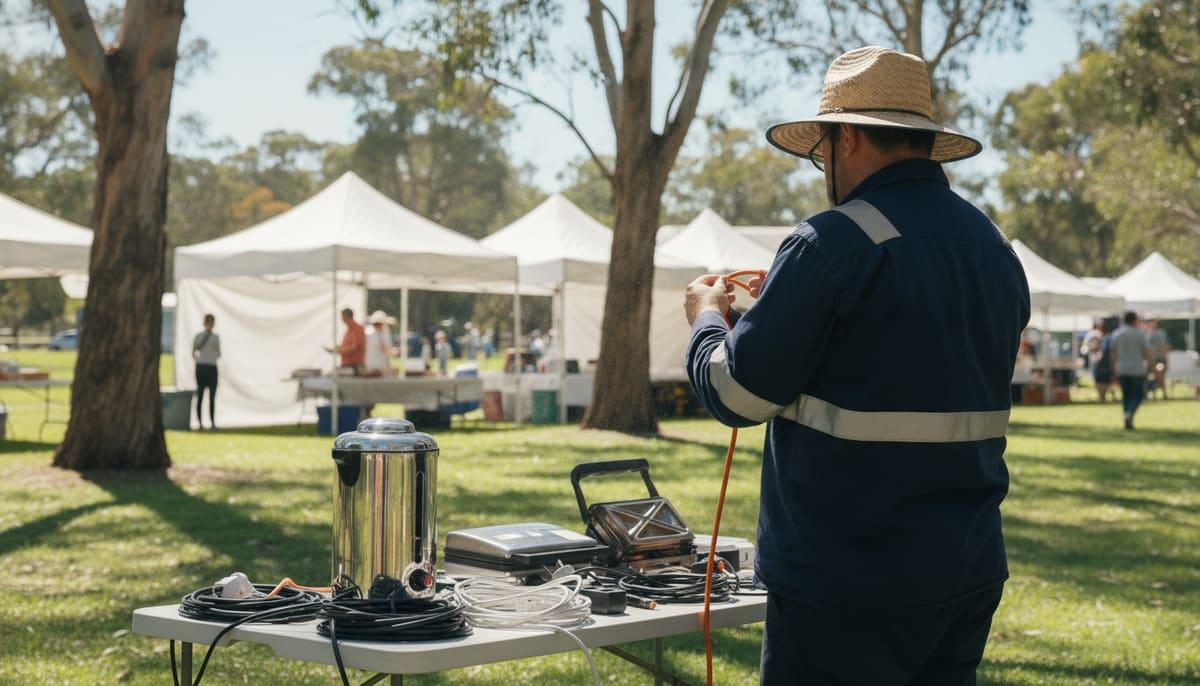
Test and tag for events and markets: a guide for operators
Test and tag for events and markets: what organisers and councils ask stallholders for, AS/NZS 3002, leads and RCDs, and how operators run event-day testing.
 How-to
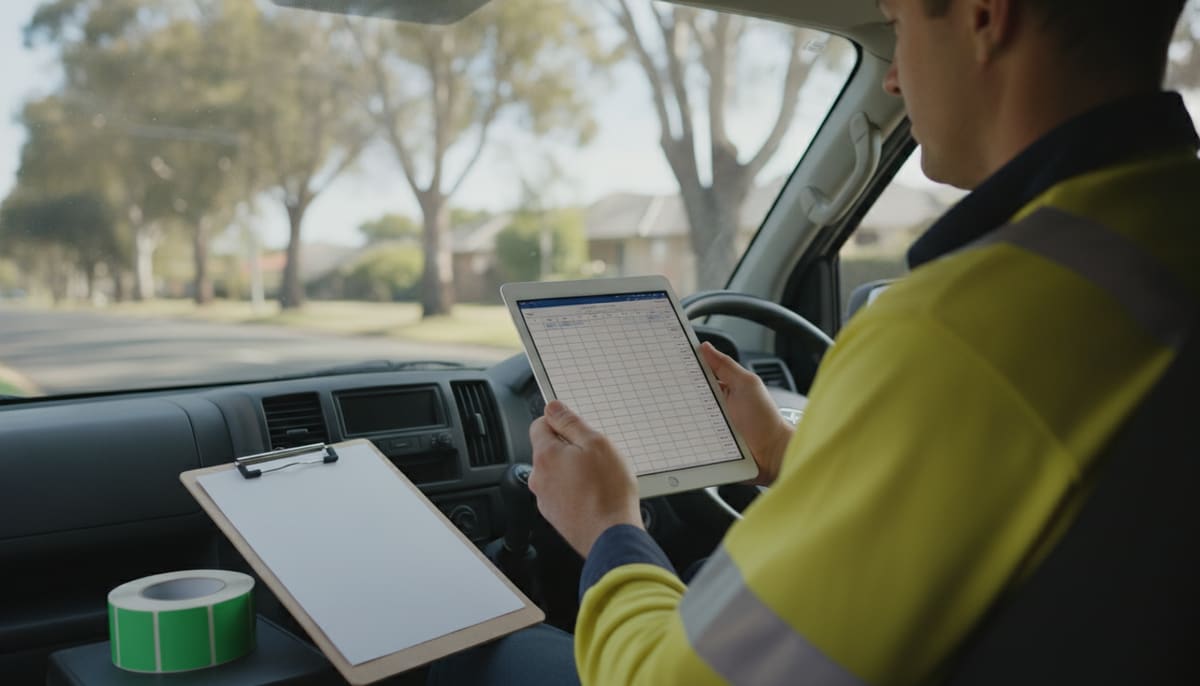
Test and tag register template (free CSV) and how to fill it in
Download a free test and tag register template in CSV. What each column means, the extra columns worth adding, and how to stop Excel breaking your tag numbers.
 Guides
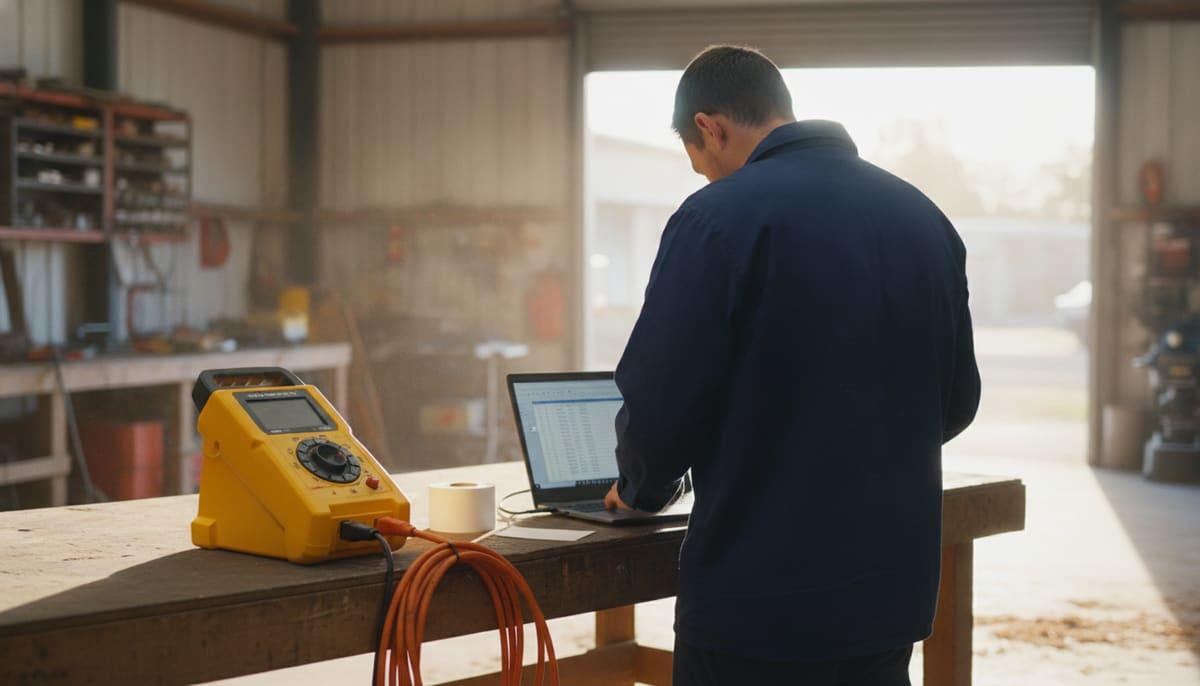
Changing test and tag software without losing your history
Changing test and tag software? When to switch in the retest cycle, how to keep your tags, asset numbers and old certificates, and what to tell your clients.
See your register the way Lyra sees it.
Start free, for as long as you like. No card needed.