Test and tag for schools and childcare: winning and keeping the work
How to win test and tag work in schools and childcare: what the rules and policies say, screening checks for contractors, booking around children, and records.
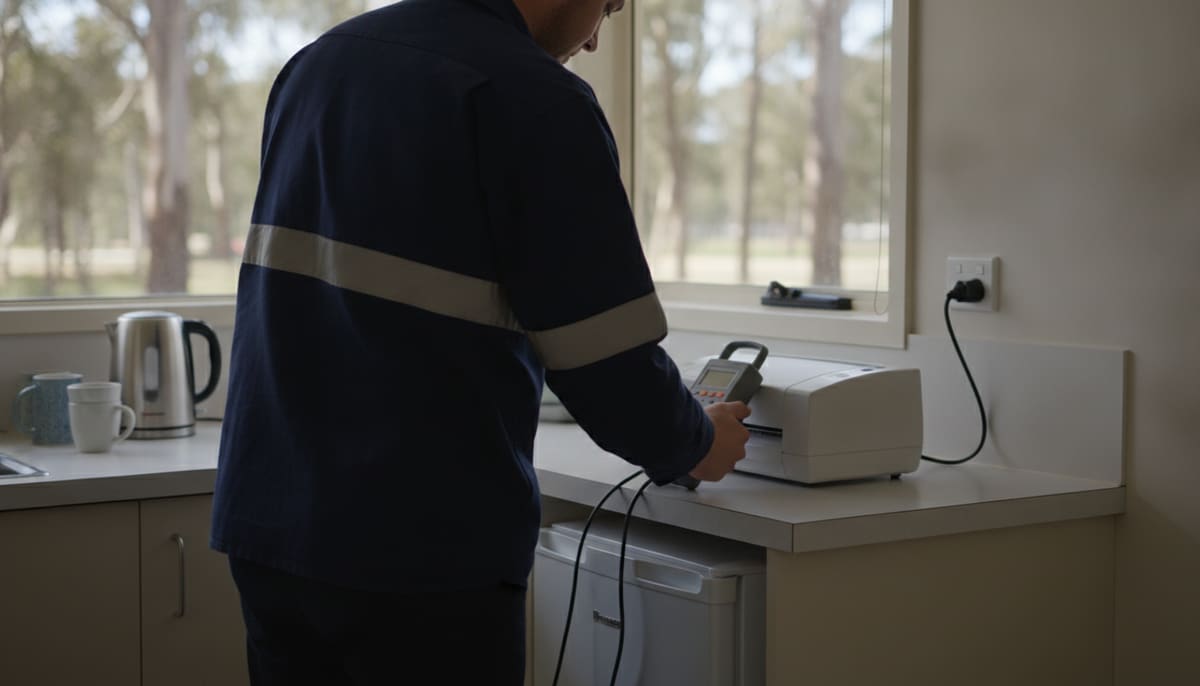
Test and tag for schools and childcare centres is steady, repeat work for operators who can get through the door. Schools and centres are full of plug-in equipment, they're audited and inspected, and many have written rules that say testing must happen. What sets them apart from an office job is everything around the test: screening checks before you're allowed on site, booking around children, and records that a principal or centre director can hand to an assessor without ringing you.
This guide is for test and tag operators who want to sell into schools, kindergartens, long day care and outside school hours care (OSHC). It covers what the rules and policies actually say, what to have ready before you quote, and how to run visits so you're booked again next year.
General information only, not legal advice. Check your state or territory's WHS and electrical safety laws, the relevant education department's current policies, your state's working with children rules, and AS/NZS 3760 for your situation.
Why schools and childcare are worth the effort
- The equipment count is high. Staffrooms, classrooms, kitchens, science rooms, workshops, laundries and offices all add up. Many sites also have equipment staff bring from home.
- The work repeats. Once a site has a register and due dates, retests come around on a cycle. AS/NZS 3760 gives indicative intervals by environment, and a school usually has several environments on one site.
- Groups have many sites. Childcare groups, Catholic and independent school systems and OSHC providers run many sites under one decision maker. Win the first centre well and the rest can follow.
The trade-off is paperwork and lead time. Expect checks, inductions and longer payment terms than a small business would ask for.
What the rules and policies say
Schools
No single national rule says schools must test and tag. The duty comes from the same WHS and electrical safety laws that cover every workplace, and some education departments turn that into a firm policy.
Victoria is the clearest public example. The Department of Education's policy for government schools says the principal or their delegate must arrange for electrical equipment to be tested and tagged by a competent person, which it defines as a licensed electrician or someone who has completed the UEERL0003 unit (or the older UEENEE026A), and record the results on an electrical equipment register (Victorian Department of Education: testing and tagging policy and procedure). The procedure is worth reading before you quote a Victorian school, because it spells out what they'll expect from you:
- the register must show equipment name, location, test date, next test date, pass or fail, and tag number
- equipment staff bring into the school (toasters, laminators, fans) must be tested and tagged before use
- hired and loaned equipment must be kept current on the register
- double adaptors must not be used, and power boards and extension leads must meet the relevant Australian Standards and be tested
- failed or unsafe items must be isolated and tagged out
Queensland's Department of Education publishes its own guide to managing electrical equipment in state schools (Department of Education Queensland: electrical safety guide). Queensland also sets legal maximum intervals by type of work, and the Electrical Safety Regulation's examples of service work include teaching and childcare. Our guide to Queensland test and tag requirements explains how that works.
Government schools don't always book their own testing. Some departments run central or regional maintenance contracts. Ask early who arranges testing at the site, because the answer tells you whether you're quoting the school, a head contractor or the department. Independent and Catholic schools usually choose their own contractors.
Childcare and OSHC
The National Quality Framework doesn't name test and tag either. Regulation 103 of the Education and Care Services National Regulations requires premises, furniture and equipment to be safe, clean and in good repair. ACECQA's guidance for the matching element of the National Quality Standard (Element 3.1.2, Upkeep) says assessors may sight documented procedures and schedules for maintenance and safety checks, along with risk assessments of the physical environment (ACECQA: Element 3.1.2 Upkeep).
So when a centre director says "we need it for our assessment", what they usually mean is that a current test and tag register is an easy way to show equipment safety checks are scheduled and done. The legal duty to manage electrical risk still comes from WHS and electrical safety law. Be accurate about this when you sell. Don't tell a centre the National Regulations require test and tag by name, because they don't.
Before you quote: screening, insurance and paperwork
Working with children checks
Working with children checks are issued under state and territory law, and the name, rules and application process differ in each state (Australian Government Department of Education: working with children checks). Whether a contractor needs one depends on the state, the work and the client's own policy, and the rules are tightening.
NSW is a good example of how quickly things change. From 1 September 2026, contractors working in NSW public schools need a valid paid NSW Working with Children Check before they can enter a school site. They must also declare it to the department and check in and out with photo ID at the front office (NSW Department of Education: contractor screening requirements). Contractors engaged through School Infrastructure NSW also need a Nationally Coordinated Criminal History Check.
The practical rule: get the check for each state you work in before you start pitching schools and centres, and ask every client what they require. A check can take time to come through, and many schools and centres ask for one even where the law may not.
What else to have ready
Most schools and childcare groups will ask for the same things a tender would. Our guide to finding test and tag clients covers tenders and panels in more detail. Have these ready as PDFs:
- Your ABN and a certificate of currency for your insurance.
- Evidence of competency, such as your UEERL0003 statement of attainment, and any licence your state requires.
- Working with children check numbers for everyone who will attend.
- A sample certificate and register with fake data, showing location, test date, next test date, result and tag number.
- Your process for failed items: who you tell, how you tag them out, and what happens next.
Running the visits
Schools and centres judge you on how little you disrupt the day. A few habits that help:
- Book around children. School holidays and pupil-free days are ideal for classrooms. For childcare, ask for the quietest time of day and expect to work room by room while children are elsewhere.
- Sign in and stay visible. Use the front office sign-in every time, wear your ID, and follow the site's rules on where you can go unaccompanied.
- Never leave leads or testers unattended. A cord across a play area or an open kit bag in a room children can reach is a hazard you created.
- Tell staff before you switch things off. Fridges with medication or breast milk, aquarium pumps and server cabinets shouldn't go off without a word.
- Record the location properly. "Room 4, kitchenette" beats "kitchen". Schools want to find failed items fast, and the Victorian procedure expects location on the register.
- Catch the items staff bring in. Ask the office for a list of personal heaters, fans and kettles, or tag them as you find them. These are the items most often missed.
- Report failures the same day. A short list with the room, the item and a photo lets the business manager act before you've left the car park.
Records the principal can hand to an assessor
The record is what keeps you on the panel. A principal, business manager or centre director needs to answer "is everything current?" quickly, often for an audit, an insurer, an assessment visit or a new staff member who has taken over WHS.
Give multi-site clients one register per site, with each certificate attached to its visit, and a summary they can read at a glance: items, current, due soon, overdue and open failures. Our guide to compliance reports clients actually read shows what to put on that summary.
Even better, let them look it up themselves. Koalaris gives each client a read-only portal to see their own register, history and certificates, and it never shows your prices or invoices. Each client can have as many sites as it needs, such as a childcare group with several centres. See Koalaris test and tag software for how the register, field app and tags work together.
Frequently asked questions
Is test and tag mandatory in schools?
It depends on the state and the school. WHS and electrical safety laws require electrical risks to be managed in every workplace, and some education departments make testing a firm policy. Victorian government schools, for example, must have equipment tested and tagged by a competent person and recorded on a register.
Do childcare centres have to test and tag?
The National Regulations don't name test and tag. Regulation 103 requires equipment to be safe and in good repair, and assessors may ask to see maintenance and safety check schedules. A current test and tag register is a common way to show that, alongside the centre's WHS duties.
Do I need a working with children check to test and tag in a school?
Often, yes, and the rules differ by state. From 1 September 2026, contractors in NSW public schools need a paid NSW Working with Children Check before entering the site. Check your state's rules and ask each school or centre what it requires before your first visit.
Should I test equipment staff bring from home?
Usually, if it's used at the site. The Victorian schools procedure says equipment brought into a school must be tested and tagged before use. Agree with each client whether personal items are in scope and how you'll charge for them.
Set up your first school or centre today. Koalaris is free with no card and no end date: unlimited items, clients and sites, the offline field app, instant tags, certificates with your logo and a free portal for each client. See how it works for test and tag.

Koalaris is test and tag software built in Australia. See what it does.
Keep reading
 Guides
Test and tag for events and markets: a guide for operators
Test and tag for events and markets: what organisers and councils ask stallholders for, AS/NZS 3002, leads and RCDs, and how operators run event-day testing.
 How-to
Test and tag register template (free CSV) and how to fill it in
Download a free test and tag register template in CSV. What each column means, the extra columns worth adding, and how to stop Excel breaking your tag numbers.
 Guides
Changing test and tag software without losing your history
Changing test and tag software? When to switch in the retest cycle, how to keep your tags, asset numbers and old certificates, and what to tell your clients.
See your register the way Lyra sees it.
Start free, for as long as you like. No card needed.