Choosing a PAT tester for a new test and tag business in Australia
There's no single best PAT tester in Australia. How to choose one for test and tag: the tests you need, RCD testing, memory and export, calibration and cost.
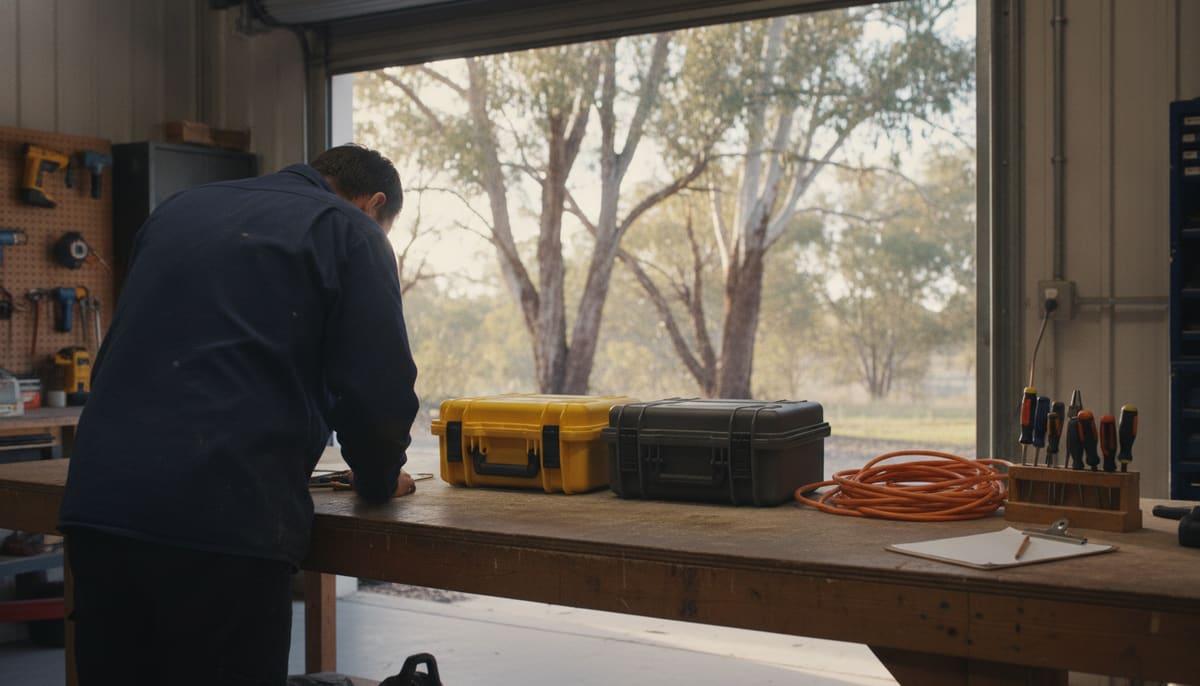
There's no single best PAT tester in Australia. The right one is the tester that does every test your clients' equipment needs under AS/NZS 3760, suits how many items you test a day, and gets results into your records without retyping. For most new test and tag businesses that means a portable appliance tester (PAT) with:
- Earth continuity, insulation resistance and leakage tests for Class I and Class II equipment and leads.
- Polarity checks for extension leads and powerboards.
- RCD trip-time testing, either built in or as a separate RCD tester.
- Memory and an export file, so results don't have to be typed again.
- An Australian test socket, local support and a calibration service.
This guide walks through each of those, what they cost, and the questions to ask a supplier before you buy. It doesn't rank brands: models change every year, and the right tester depends on your work.
General information only, not legal or technical advice. The test methods and limits are in the current edition of AS/NZS 3760, and your state or territory regulator may add requirements. Check both, and the manufacturer's instructions, before you rely on any tester.
Start with the tests your work requires
A PAT tester exists to do the tests in AS/NZS 3760:2022. Standards Australia's own summary lists the standard's testing procedures as earth continuity, insulation resistance and polarity checks, alongside inspection, frequency, tagging and records (Standards Australia).
WorkSafe ACT spells out what in-service testing should include, where applicable (WorkSafe ACT):
- an external inspection of the equipment and its supply cord
- protective earth continuity tests for Class I equipment, power boards and cord sets
- insulation testing, by measuring either insulation resistance or leakage current
- a polarity check on cord sets with rewireable plugs and extension sockets
So the minimum is a tester that does all four on Class I and Class II items and on leads. Every mainstream Australian PAT should, but check the specification sheet rather than the box. Suppliers note that the tests available depend on the model.
Insulation resistance or leakage current?
Most testers offer both, and it's worth having both:
- Insulation resistance applies a DC test voltage with the item switched on but not running from mains. It's quick and works on most equipment.
- Leakage current powers the item from mains and measures current escaping to earth. It's useful for items that have to be running for every circuit to be in use, but the tester needs mains power and the item has to be safe to switch on.
Surge-protected powerboards and IT gear
This one catches out new operators. One tester manufacturer explains that most surge protection devices start conducting at around 300 V, so a 500 V insulation test can give a very low reading on a healthy item. Its advice is to drop the test voltage to 250 V if the tester allows it, or to use a leakage-type test instead (Seaward). That's UK manufacturer guidance, so follow AS/NZS 3760 for the method you use here. The buying lesson still applies: a tester with a lower insulation test voltage or a leakage test gives you an option when a surge-protected board reads low.
RCD testing: built in or separate?
Portable RCDs and safety switches need an operating-time (trip-time) test with an instrument, not only the push button. The model code of practice, as published by SafeWork NSW, describes Type I RCDs (10 mA, tripping within 30 milliseconds) and Type II (above 10 mA up to 30 mA, tripping within 300 milliseconds). Our RCD testing guide covers the intervals and records.
You can do this with a PAT that has an RCD function or with a separate RCD tester. A built-in function means one instrument, one calibration and one set of results. A separate tester can be cheaper if you already own one. Check that whatever you buy tests at both 10 mA and 30 mA, because medical and dental clients use Type I RCDs.
Pass/fail or real readings?
Some entry-level testers show a pass or fail light. Others display and store the measured value, such as 0.08 Ω for earth continuity.
Readings are worth having even if you don't have to record them. A reading close to the limit tells you an item is on its way out, clients and auditors sometimes ask for them, and they make a dispute about a failed item much easier to settle. Many operators include them on certificates or attach them as a schedule.
Memory, export and how results reach your records
This is the question that matters most after the tests themselves. Every item you test needs a record with the result and the next due date. You can get the result into your records three ways:
| How results get recorded | What it looks like | Watch out for |
|---|---|---|
| Type them in | Read the tester's screen, enter the result in an app or on paper | Typing time on every item, and typos |
| Download later | The tester stores results, then you export them to a computer at the end of the day | The export format and software the tester uses |
| Tester as the register | The tester's own software is your register and client records | Lock-in: moving to other software later means exporting everything |
Before you buy, ask the supplier:
- How many results does it store, and what happens when the memory is full?
- How do results come off it? USB, Bluetooth or a memory card, and to what software?
- What file does that software export? A CSV or Excel export means you can move your records to other software later. A proprietary file can mean retyping.
- Is the software a separate licence or subscription? Count it in the price.
- Can it read barcodes or asset IDs, so a result is linked to the right item?
If you print tags, also check whether the tester prints them itself or whether your software does. Our test tag printers comparison covers the printer side.
Practical things that matter on site
- Australian test socket and leads. Buy a model sold for Australia and New Zealand. A UK model has the wrong socket for local plugs.
- Battery or mains power. Battery testers are lighter and quicker to move around an office. Leakage tests need the item powered from mains, so check which tests a battery model can actually do.
- Weight and case. You'll carry it up stairs and across car parks all day.
- Lead and three-phase adaptors. If clients have three-phase equipment or 15 A and 32 A leads, check which adaptors the tester supports before you quote that work.
- Speed. An automatic test sequence that runs earth, insulation and polarity in one press saves time on every item. Over a few hundred items a day, seconds add up.
Calibration: budget for it from day one
A tester is only as good as its last calibration. Seaward, for example, recommends calibrating its testers annually, or sooner if there's any reason to doubt their accuracy, such as damage (Seaward). Follow your own manufacturer's recommendation and keep the calibration certificate.
Before you buy, ask:
- where the tester is calibrated in Australia, and how long it's away
- what calibration costs each year
- whether the supplier lends a tester while yours is away
Clients and auditors sometimes ask which instrument a result came from and when it was last calibrated, so keep the tester's model, serial number and calibration due date with your records.
What a PAT tester costs
Prices vary a lot with the tests, memory and accessories. As one example, a major Australian supplier's 2026 price sheet lists a basic tester for Class I, Class II, leakage and lead tests at $799 ex GST, a model with a keypad and 10 mA and 30 mA RCD trip-time tests at $2,599 ex GST, and that model with a tag printer kit at $3,999 ex GST (Emona ProTag). That's one supplier's range, not a market average. Get quotes from two or three suppliers, and include software, adaptors and the first year's calibration in the comparison.
Our guide on how to start a test and tag business puts the tester alongside your other start-up costs, such as training, insurance and tags.
A quick checklist before you buy
- Does it do earth continuity, insulation resistance, leakage and polarity on Class I, Class II and leads?
- Does it test RCDs at 10 mA and 30 mA, or will you need a separate RCD tester?
- Does it show and store real readings, not only pass or fail?
- Can it test surge-protected items at a lower voltage or by leakage?
- How do results come off it, and can you get a CSV or Excel file out?
- Is there an Australian model, local support and a calibration service?
- What's the total cost over three years, including software and calibration?
Using your tester with Koalaris
Koalaris doesn't replace your tester. It works alongside whichever one you choose. You can record each result in the offline field app as you go, or import your tester software's export file (Metrel ES Manager, WinPATS, PATGuard, or any CSV or Excel file) and let Lyra AI match the columns to your register. You review every match before anything is imported.
Each technician enters their tester's brand, model, serial number and calibration due date once. Every test they record carries it, certificates print it, and Koalaris warns as calibration falls due. See how it fits into a site visit on the test and tag app page, or start on the Free plan, with no card and no end date, before your tester arrives.
Frequently asked questions
What is the best PAT tester in Australia?
There isn't one best tester for everyone. Choose one that does earth continuity, insulation resistance, leakage and polarity tests on Class I and Class II equipment and leads, tests RCDs at 10 mA and 30 mA, stores readings, and exports results in a format you can use. Then compare local support, calibration and the total cost.
Do I need a PAT tester with RCD testing?
You need some way to do instrument trip-time tests on RCDs if your clients have portable RCDs or safety switches. A PAT with an RCD function does it in one instrument. A separate RCD tester also works.
How often does a PAT tester need calibrating?
Follow the manufacturer's recommendation. Seaward, for example, recommends annual calibration, or sooner if the tester is damaged or you doubt its accuracy. Keep the calibration certificate with your records.
Can I use a UK PAT tester in Australia?
Buy a model sold for Australia and New Zealand. A UK model has a UK test socket, so local plugs won't fit, and its settings may be built around UK practice rather than AS/NZS 3760. Ask the supplier to confirm the model suits AS/NZS 3760 testing.
Is a cheaper pass/fail tester good enough to start?
It can do the tests, but you lose the readings. Readings help you spot items close to the limit and answer client or auditor questions. If your budget is tight, a basic tester that still displays readings is usually a better buy than a pass/fail one.

Koalaris is test and tag software built in Australia. See what it does.
Keep reading
 Guides
Test and tag for events and markets: a guide for operators
Test and tag for events and markets: what organisers and councils ask stallholders for, AS/NZS 3002, leads and RCDs, and how operators run event-day testing.
 How-to
Test and tag register template (free CSV) and how to fill it in
Download a free test and tag register template in CSV. What each column means, the extra columns worth adding, and how to stop Excel breaking your tag numbers.
 Guides
Changing test and tag software without losing your history
Changing test and tag software? When to switch in the retest cycle, how to keep your tags, asset numbers and old certificates, and what to tell your clients.
See your register the way Lyra sees it.
Start free, for as long as you like. No card needed.